

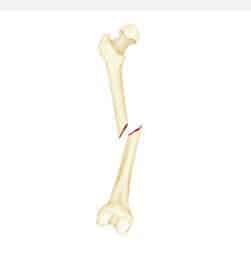
A serious fracture can require far more than waiting for a broken bone to reconnect. The American Academy of Orthopaedic Surgeons (AAOS) explains that fracture recovery varies according to the location and extent of the injury, a person’s age and health, and other factors affecting healing. Severe injuries can also damage muscles, nerves, blood vessels, and other tissues surrounding the fracture.
When a fracture results from a vehicle collision, fall, or another accident, medical recovery can unfold alongside questions about treatment expenses, missed work, and other losses. Dow Law Firm provides information about Austin personal injury claims, including claims involving broken bones. The course of medical treatment often becomes clearer only as doctors monitor whether the bone is healing properly and whether additional complications develop.
1. Delayed Union or Nonunion Can Keep the Bone From Healing on Schedule
A fracture depends on stability and an adequate blood supply to heal. AAOS defines a delayed union as a fracture that takes longer than usual to heal and a nonunion as a fracture that fails to heal. High-energy injuries can raise concern because severe trauma can disrupt blood flow around the broken bone. Infection, complicated open fractures, poor nutrition, and certain health conditions are among other factors AAOS identifies in connection with nonunion.
A delayed or failed union can extend treatment well beyond the initial period of immobilization. Doctors may use repeated X-rays, CT scans, or other imaging to track healing. AAOS explains that treatment for a nonunion can involve additional immobilization, a bone stimulator, bone grafting, or another operation using internal or external fixation. A second procedure means the patient’s recovery no longer follows the original timeline expected after the fracture.
2. Infection Can Require Additional Treatment or Surgery
Open fractures create a particular infection risk because a wound exposes the fracture and surrounding tissues to the outside environment. AAOS describes open fractures as especially serious for this reason. In its guidance on femoral shaft fractures, the organization explains that bone infection can develop even after surgical cleaning and that such infections can be difficult to treat.
An infection can interrupt the normal progression from fracture stabilization to rehabilitation. AAOS notes that bone infections associated with severe open fractures can require long-term antibiotics and multiple operations. Infection also appears among factors that can contribute to nonunion, meaning one complication can interfere directly with the bone-healing process and create another problem that requires treatment.
3. Blood Clots Can Add a Separate Medical Problem During Recovery
Serious fractures sometimes require reduced activity, casting, hospitalization, or surgery. Those circumstances can overlap with recognized risk factors for blood clots. MedlinePlus, a service of the National Library of Medicine, identifies serious injuries, certain surgeries, and remaining in one position for a long period as factors associated with an increased risk of blood clots. A clot in a deep vein is known as deep vein thrombosis, or DVT.
A DVT becomes particularly dangerous if part of the clot breaks loose and reaches the lungs, creating a pulmonary embolism. MedlinePlus identifies broken hip or leg bones, other trauma, casts, and prolonged immobility among factors associated with pulmonary embolism. When a clot occurs during fracture recovery, it introduces a medical condition requiring its own evaluation and treatment rather than allowing rehabilitation to proceed as originally planned.
4. Nerve or Blood-Vessel Damage Can Affect Function Beyond the Bone
A high-force fracture can injure more than bone. AAOS explains that sharp ends of broken bone can damage nearby nerves or blood vessels in serious femur fractures. Neurovascular damage can affect sensation, muscle function, or circulation in the injured extremity, adding concerns that are different from whether the fracture itself has been aligned and stabilized.
Some fractures can also be associated with acute compartment syndrome, a condition in which pressure rises within muscle compartments and reduces blood flow to nerves and muscle cells. AAOS classifies acute compartment syndrome as a surgical emergency and warns that permanent disability can result when dangerous pressure is not relieved quickly. Emergency surgery and injury to surrounding tissues can make the recovery process substantially more involved than healing an uncomplicated bone fracture.
5. Joint Stiffness and Muscle Weakness Can Continue After the Bone Heals
Immobilization protects many fractures while the bone heals, but reduced movement has consequences for surrounding muscles and joints. AAOS explains that people commonly lose muscle strength and range of motion during fracture recovery. Even after a cast or brace comes off, the bone may not yet be ready for unrestricted activity, and exercises can be needed to restore strength, flexibility, and joint motion.
The effects can be more pronounced when the fracture involves or lies near a joint. AAOS notes, for example, that adult forearm fractures can leave stiffness in the wrist or elbow and can limit rotation of the forearm. Rehabilitation therefore has a separate goal from bone union: restoring practical movement and strength after the period of injury and immobilization. In some cases, functional recovery continues after imaging confirms that the fracture itself has healed.
Recovery Depends on More Than the Original Break
The initial X-ray shows where and how a bone broke, but it does not by itself determine the entire recovery path. Healing can be prolonged when the bone forms a delayed union or nonunion, infection develops, a blood clot interrupts recovery, surrounding nerves or vessels are damaged, or prolonged immobilization leaves significant weakness and stiffness. These complications also differ greatly in urgency and treatment.
AAOS emphasizes that fracture-healing time varies with the severity and location of the injury as well as individual health factors. Following the treating medical team’s restrictions, attending follow-up appointments, and completing prescribed rehabilitation allow healing to be assessed as it progresses. When complications arise, the additional treatment they require can explain why recovery from a serious fracture extends well beyond the period initially expected for the broken bone alone.