

By WorldIQ Team
We spend billions attempting to equalize student outcomes. We standardize curricula, train teachers in the latest “learning styles,” and provide state-of-the-art technology to every classroom. Yet, a stubborn reality remains: even in the most equalized environments, individual differences in achievement don’t shrink—they widen. This is why IQ still matters in 2026.
The Paradox of Equality
In the 1920s, the Soviet Union attempted to equalize school environments across a massive empire. When standardized tests continued to show that some children learned faster and more deeply than others, the state didn’t fix the instruction; they banned the tests.
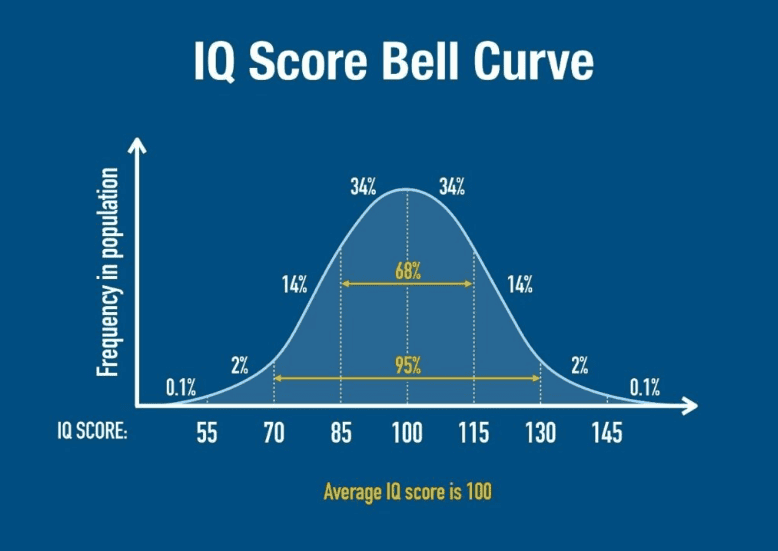
It is always easier to hide individual differences than to eliminate them. But ignoring the “elephant in the room”—intelligence—does a massive disservice to the learner. As modern research consistently shows, IQ is the single best predictor of educational and professional outcomes, with correlations ranging from .40 to .80.
Why Environments Can’t Erase Biology
Many educators subscribe to the “blank slate” theory, believing that any student can become a gifted overachiever with the right teacher. However, data from industrialized nations indicates that roughly 90% of differences in learning outcomes are associated with individual differences among students, while only 10% relate to classroom characteristics.
This isn’t a message of fatalism; it’s a message of precision. When we understand our cognitive baseline, we can stop fighting our nature and start optimizing our growth.
- Learning Speed: High-IQ individuals often “outrun” standard curricula, leading to boredom and disengagement.
- The Matthew Effect: Those with higher initial cognitive ability gain more from good instruction, creating a widening gap over time.
- Non-Cognitive Synergy: Academic success is a mix of IQ and “grit” (motivation, stability). Because these traits are also partially heritable, the cognitive gap in schools is often more pronounced than we care to admit.

The Cost of Ignorance
In the United States and Europe, the refusal to acknowledge IQ has led to a “lockstep” education system. Students move at the rate of one grade per year regardless of mastery. This results in two tragedies:
- The Under-Challenged: Up to 25% of high schoolers are “college ready” by 11th grade but are forced to wait.
- The Over-Stretched: Students who need more time and specialized tutoring are pushed forward before they are ready, leading to functional illiteracy.
Knowledge is Power: Testing as a Tool for the Individual
If the education system refuses to acknowledge your cognitive profile, you must take the lead. Understanding your IQ isn’t about “labeling” yourself—it’s about understanding your processing power.
At World IQ Test, we believe that data belongs to the individual. Whether you are looking to understand why you’ve always felt “out of sync” with standard instruction, or you want to benchmark your cognitive health, a standardized assessment provides the clarity that modern institutions often avoid.
Conclusion
We cannot equalize human potential, but we can equalize the opportunity to understand it. By measuring the “elephant in the room,” we stop guessing and start growing.