


Year after year hundreds of thousands of veterans return home from deployment. But for many of them, coming home doesn’t mean the fight is over.
PTSD, depression, anxiety, suicidal thoughts…these things aren’t exclusive to battlefield situations. For veterans suffering from mental health conditions and illnesses, just getting by can feel like a battle all its own.
The problem is widespread. It’s urgent. And it’s only getting worse.
But there’s hope.
A nexus letter for veterans can help, and working with the nexus letter pros makes navigating the process much easier. Let’s talk about what’s going on…and how to start fighting back.
Here’s what’s covered:
- The Veterans Mental Health Crisis By the Numbers
- Common Mental Health Conditions Among Veterans
- Why It’s Hard for Veterans to Get Help
- What Is a Nexus Letter for Veterans?
- How To Get a Nexus Letter for Your VA Disability Claim
- The Nexus Letter for Veterans Game Plan
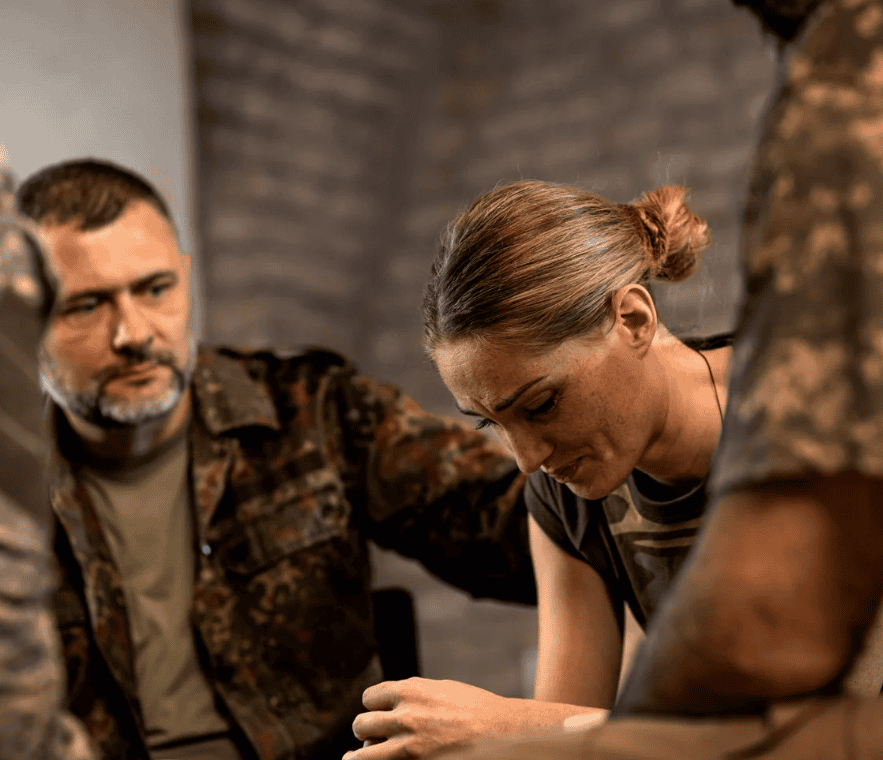
The Veterans Mental Health Crisis By the Numbers
By now, the staggering stats have probably made the rounds.
Every day, 17 veterans die by suicide. Data from VA healthcare suggests this number is rising. Twenty percent of Operation Iraqi Freedom veterans have been diagnosed with PTSD. Twenty four percent of veterans seeking VA mental health treatment suffer from mental health-related conditions. These numbers aren’t improving — they’re getting worse.
Data published by The Wounded Warrior Project paints a grim picture as well. When surveyed in 2025, nearly half of post-9/11 wounded veterans reported moderate to severe symptoms of depression or anxiety. One in four veterans said they experienced suicidal thoughts in the past year.
Too many heroes are dying by suicide. Too many families are being left behind to face the nation’s mental health crisis alone.
The VA wants to help. They really do. But too many veterans don’t know where to start. Or how.
Common Mental Health Conditions Among Veterans
A large percentage of veterans walk away from their time in uniform with unseen scars.
Post-traumatic stress disorder. Depression. Anxiety. Addiction. Traumatic Brain Injury. They’re all far too common among servicemen and women who have returned home.
According to data from the VA, as many as 1 in 5 veterans who served in Iraq and Afghanistan have PTSD. Women are more likely to experience PTSD than men (over twice as likely, in fact) due to military sexual trauma.
Combat-related depression rates fall between 14% and 16%. Veterans struggling with PTSD are much more likely to develop depression. And vice versa.
From 11.1% to 20% of veterans struggle with substance use disorders after returning from combat. Veterans are twice as likely to die from substance abuse as non-veterans. Those struggling with PTSD and pain see higher rates of addiction.
Not every veteran comes home with PTSD. Not every veteran will experience depression or drugs. But as many as 1 in 4 will develop a mental health condition that won’t just magically go away after leaving the service.
Some of these conditions are developed during deployment. Many more develop or drastically worsen after separation.
There’s no support system for veterans when they return home. At bootcamp, they learn to band together and rely on one another. In the military, you become part of something bigger than yourself. When you leave the military, that community is gone.
Suddenly, veterans have to find a new normal. They have to find a new purpose. They have to entirely reconstruct their lives.
And many turn to pain medication, drugs, or alcohol to fill the void they’re left with.
Why It’s Hard for Veterans to Get Help
The VA offers resources to veterans suffering from mental illness or other health conditions. The thing is, taking advantage of those resources can be incredibly difficult.
Veterans face outrageous wait times. Rural veterans often live too far from VA facilities. Staffing shortages make it difficult for VA providers to give veterans the help they need. Many suffer in silence because of cultural stigma surrounding mental health.
A lot of veterans don’t ask for help. When they finally do, they’re often met with mental health providers that are stretched too thin to really take the time to understand their struggles.
The culture of silence around mental health in the veteran community is real.
Broaching the subject of mental health has traditionally been seen as weak or as a sign of poor character. Asking for help compounds that.
Still, things are changing for the better. VA claims data shows mental health conditions continue to rise. Between 2020 and 2024 mental health claims skyrocketed by 77%. Veterans are slowly starting to come forward for the help they deserve. But regardless of whether or not they know it, many are still ineligible for the VA benefits they seek.
Veterans may know something is wrong. They may know they need help. But navigating the VA system to prove they qualify for benefits is a whole other obstacle.
This is why nexus letters exist.
What Is a Nexus Letter for Veterans?
Simply put, a nexus letter for veterans is medical proof that a veteran’s current mental condition is related to their time in the military.
The VA needs proof that there’s a connection between military service and the current condition.
- You have a diagnosed condition.
- You were injured or experienced a health condition/event while in service.
- Proof that those two things are connected.
That last part is called the medical nexus. Without it, VA claims get denied. Denied faster than you can file an appeal.
A nexus letter serves as that proof. Without one, you’re fighting an uphill battle.
When looking for information to approve claims, the VA is looking for certainty.
“But is it at least as likely as not that…”
You’ve got to hit them with that magic phrase.
“As likely as not” means greater than 50% chance in VA-speak. If a doctor can prove to the VA that there’s at least a 50/50 shot that the condition is related to military service, they’ll approve the claim — almost every time.
For more veteran-specific terms, check out the comprehensive VA Glossary for Claim Jumpers.

How To Get a Nexus Letter for Your VA Disability Claim
Just like with any other claim, word choice matters. How the nexus letter is filed is just as important as what’s in it.
Vague letters can actually hurt a claim. Nexus letters should include the following:
- A diagnosis using appropriate clinical language
- A review of military records and post-service medical history
- Detailed medical reasoning behind the claim of service connection
- Provider’s credentials and contact information
Ideally, the nexus letter will be written by a treating doctor. Due to massive conflict of interest concerns within the VA, VA doctors are notoriously discouraged from submitting nexus statements on behalf of veterans. While a VA doctor shouldn’t be dismissed, working with a private physician, specialist, or independent medical examiner (IME) is usually the best bet.
Just make sure they know what they’re doing.
The Nexus Letter for Veterans Game Plan
Veterans suffering from mental health conditions are a huge part of what’s driving the veteran suicide epidemic.
These diseases don’t discriminate. They can affect anyone, at any rank. And they can negatively impact families, friends, and entire communities.
Providing veterans with the help they need starts with making sure they file the correct paperwork. Making sure their claims are topped off with a rock-solid nexus letter.
Things are bad, but they don’t have to stay that way. Take action.
Help veterans fight their fight. Make sure they’re filing claims the right way. Connect with veterans in your life. Help them build their nexus letter, then fight for them.