


Many of us heard growing up that someone with an addiction problem would be able to stop using if they just had enough willpower. The idea is simple and straightforward. Unfortunately, it is often wrong.
Substance use disorders can involve real changes in brain circuits tied to reward, stress, motivation, and self-control. Those changes can shape behavior in ways that may look confusing, frustrating, or almost automatic from the outside.
Most of the pain, honestly, lives in the gap between what you figured was true and what was actually happening. You assumed one thing. Reality was doing something else. People pick that up and turn it on themselves.
Families fracture over it. Understanding the psychology of addiction isn’t about letting anyone off the hook. The harm happened.
The responsibility is real. But “just stop” almost never works, and knowing why can finally push you toward something that does.

The Shame Underneath The Surface
Shame usually shows up early, long before anyone names the problem out loud. Some of it is private: the weight of broken promises.
Some of it is public: the fear of being seen as a stereotype. Either way, shame pushes people to hide, and hiding makes everything harder.
A lot of that public judgment comes from images. Awareness campaigns and viral posts often lean on stark visuals, and before-and-after crystal meth photos can be powerful when they are understood in the right context. They may show visible changes, but they cannot explain the full story on their own.
A changed jawline, a sore, a shift in weight: these details can point to real harm, but they do not capture the fear, the cravings, the family strain, or the possibility that someone can still recover.
That is why the framing matters. When we reduce a person to a “meth mouth” cliché or a shocking before-and-after image, we make it harder for them to ask for help. Images can open a conversation.
They just can’t be the whole story, and dignity is a big part of what keeps someone in that conversation long enough to get better.
How Addiction Reshapes Motivation and Choice
To make sense of the behavior, it helps to look at the brain’s reward system. With repeated use, circuits tied to motivation, pleasure, and self-control begin to shift, and the substance starts to feel less like a choice and more like a need.
This idea, sometimes called the brain disease model of addiction, describes how the brain can start treating a drug as if it were essential for survival.
Typically the biggest shock for people is realizing that someone can genuinely want to stop and still keep going back. It does not mean they lack motivation. It means cravings, stress, withdrawal, habit, and the search for relief can overpower the plan to quit.
For a lot of people, what looks like an obviously harmful choice from the outside can feel like the only relief available in that moment. Motivation may still exist; it is just competing with forces that are stronger than willpower alone.
The Ripple Through Relationships
Addiction rarely stays contained to one person. It moves through families, friendships, and workplaces. Trust wears thin as promises break. Roles shift, with partners or children taking on worry and caretaking they never signed up for. Conversations start circling the same few subjects, usually money, honesty, and safety.
If you love someone in active addiction, you already know the whiplash. Hope on Tuesday, disappointment by Friday, sometimes both in one phone call. That cycle wears people down, and it can convince you that you’re the one failing. You’re not. You’re just standing close to something very hard.
Signs It May Be More Than a Rough Patch
Everyone has stretches of heavy use or bad decisions that do not add up to addiction. A deeper problem shows up as a pattern. Someone uses more than they meant to.
They try to cut back, and the attempts do not hold. Use continues even as it damages health, work, or relationships. The key shift is direction: when the substance starts steering a person’s choices rather than the other way around, that is worth taking seriously.
This is also where professional input helps. A clinician can read the full picture in a way a worried family member cannot, and a plain conversation with a primary care provider is often a low-pressure place to begin.
Boundaries That Help Without Enabling
One of the most common questions loved ones ask is where support ends and enabling begins. The difference is less about being tough or gentle and more about being clear. A boundary protects your own limits.
Enabling, by contrast, shields someone from the natural consequences of their use, often with the very best intentions.
In practice, a clear boundary can sound like this: “I will not give you money, and I will still drive you to an appointment.” It names what you will and will not do, then it holds steady.
That is difficult, and difficulty is not a sign you are failing. Boundaries are not punishments. They are a way to stay connected to a person without losing yourself in the process.
What Recovery Support Actually Looks Like
Recovery is rarely one dramatic turning point. More often it is a series of smaller shifts held up by the right mix of help. For many people, professional treatment is part of that.
Depending on the substance, medication can play a role; for opioid use disorder, for instance, medication-assisted treatment is well established and can steady the ground while the harder work happens.
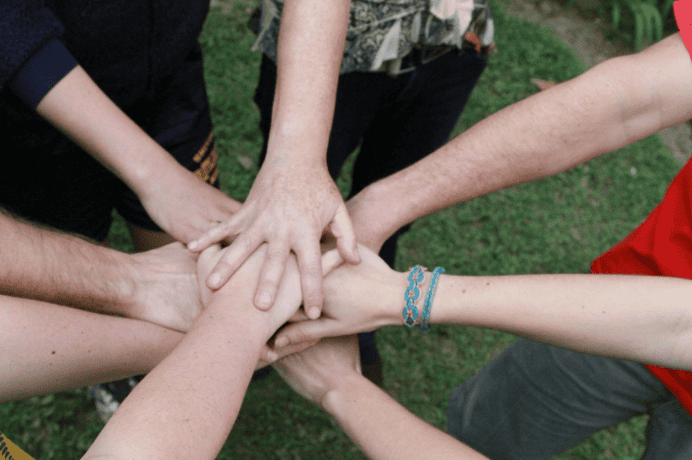
Connection matters too. Peer recovery support and recovery coaching can offer something clinical care alone often cannot, namely people who have walked a similar road and can show that change is possible.
Researchers describe this as “recovery capital,” the internal and external resources a person can draw on, and it tends to build gradually rather than arriving all at once. To keep expectations realistic, it helps to watch for small changes instead of waiting for a total transformation.
A More Accurate Map
The mental and behavioral side of addiction is not a character flaw waiting to be corrected by shame. Underneath it is a real change in how the brain handles reward and stress, wrapped inside real relationships and real feelings.
That framing is not an excuse. Think of it instead as a clearer map, and better maps lead to better decisions.
Change is possible, and it usually looks ordinary: a hard conversation, a first appointment, a boundary held one more day. Progress is seldom a straight line. Setbacks appear in many recovery stories rather than proving that recovery has failed.
Whether you are worried about your own use or someone you care about, steady and informed support does more good over time than any single confrontation. Talking with a doctor, counselor, or recovery specialist is a reasonable next move when you feel ready.
Safety Disclaimer
If you or someone you love is in crisis, call 911 or go to the nearest emergency room. You can also call or text 988, or chat via 988lifeline.org to reach the Suicide & Crisis Lifeline. Support is free, confidential, and available 24/7.
Author Bio
Earl Wagner is a health content strategist focused on behavioural systems, clinical communication, and data-informed healthcare education.
Sources
• David Eddie. (2019). Lived Experience in New Models of Care for Substance Use Disorder: A Systematic Review of Peer Recovery Support Services and Recovery Coaching . https://doi.org/10.3389/fpsyg.2019.01052
• Nora D. Volkow. (2016). Neurobiologic Advances from the Brain Disease Model of Addiction. https://doi.org/10.1056/NEJMra1511480
• Hilary S. Connery. (2015). Medication-Assisted Treatment of Opioid Use Disorder . https://doi.org/10.1097/hrp.0000000000000075
• R. Hammarlund. (2018). Review of the effects of self-stigma and perceived social stigma on the treatment-seeking decisions of individuals with drug- and alcohol-use disorders. https://doi.org/10.2147/SAR.S183256
• L. Lander. (2013). The Impact of Substance Use Disorders on Families and Children: From Theory to Practice. https://doi.org/10.1080/19371918.2013.759005