


Individuals rarely engage in formal mathematical reasoning when making decisions based on incomplete knowledge about a particular situation. When it comes to playing video games, an individual’s cognitive and emotional state alters the perception of probability, risk assessment, and action management. There is a typical error referred to as the Gambler’s Fallacy, which suggests that past occurrences could somehow influence future outcomes despite them being independent of one another. This bias shapes the behavior of most individuals in such cases.
When people see the same results happen again and again, like when match scores come out the same, the brain starts to look for patterns, even if it is all random. Today, the top digital sports sites use a lot of live data. They show scores and outcomes right away. They also change their odds as things happen to keep people interested. It helps to know the way people react to all these quick updates, especially if you want to build a system that many people use at the same time. This is true for sites like The leading digital sabong hub in the Philippines, where things move fast, and new results show up live to work with how people feel and think.
Understanding the Gambler’s Fallacy in Digital Gaming
The Gambler’s Fallacy, or the Monte Carlo Fallacy, is associated with the use of the representativeness heuristic, which is based on a very basic cognitive bias described by Amos Tversky and Daniel Kahneman. Human beings frequently assume that certain random events have to resemble events that happen when working with numbers.
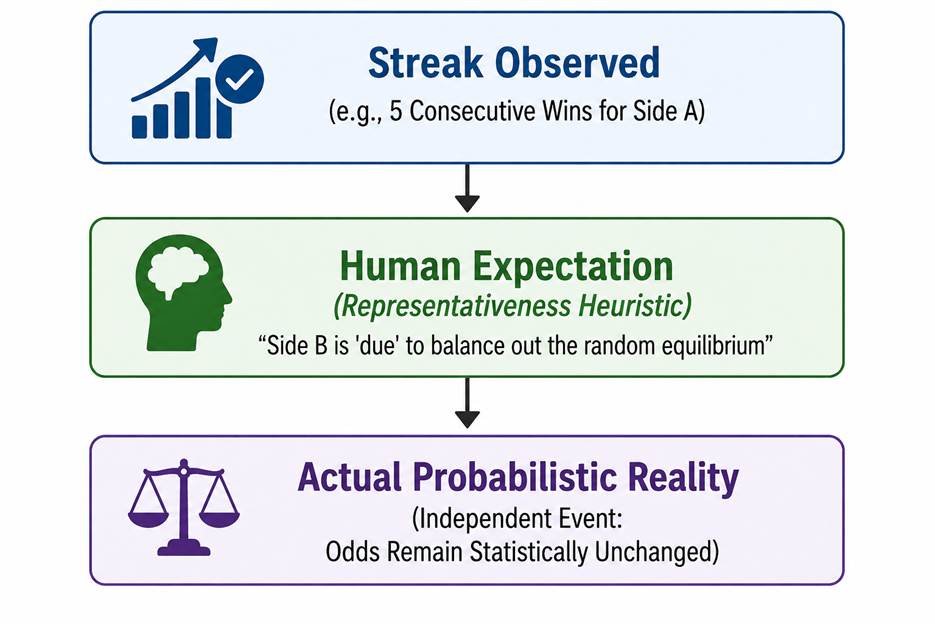
Key Cognitive Drivers of Probabilistic Errors
- False Control: People often feel that looking at old match records can help them know what will come next, even though each event does not connect with the last one.
- Wrong Idea About Randomness: Many think that chance will always fix itself soon, so things should feel normal again after a time.
- Easy to Remember Events: Big or clear events, like a long winning run, stay in people’s minds the most. This can change the way they see risk.
Behavioral UI/UX Engineering: Translating Cognitive Science to Interface Design
Modern digital sports platforms use ways to give feedback all the time. This helps the platform be clear and easy for you to use. These steps also help people stay active and want to come back.
| Interface Element | Cognitive Mechanism Targeted | UX Function & Design Objective |
| Historical Match Roadmaps | Pattern Seeking & Representativeness | Visualizing past outcomes to satisfy the user’s search for trends. |
| Real-Time Odds Recalculation | Anchoring Bias & Framing | Adjusting visual multipliers instantaneously to highlight changing market sentiment. |
| Sub-Second Live Video Feeds | Dopaminergic Anticipation | Delivering zero-lag WebRTC streams to heighten visual immersion during peak action. |
| One-Tap Micro-Transactions | Friction Reduction & Impulse Velocity | Removing multi-step confirmation popups to capture fast-moving decisions. |
The Neurological Architecture of High-Frequency Engagement
The human brain uses two main ways to think about fast events. This has been seen in research about how we think.
- System 1 (Fast, Intuitive, Automatic): This works well when things move fast. When live videos and quick updates keep coming, System 1 takes action. It relies a lot on how people feel, what people see, and thinking patterns like the Gambler’s Fallacy.
- System 2 (Slow, Analytical, Careful): This one looks at numbers and long-term facts. When pictures and updates come in very fast, we often miss using System 2. The brain gets too much to deal with, so normal thinking starts to break down.
Platform developers help people handle a lot of information by making real-time dashboards. They use clear levels, simple status signs, and quick responses to transactions. This way, hard data becomes easy for users to read.
Ethical System Design and User Retention Metrics
Cognitive biases can get people interested fast. But if you want the platform to last, you need to build trust. It is also important to keep the site working most of the time and make sure users feel safe and cared for.
- System Throughput Stability: High-concurrency sites need to run micro-wagers right away using WebSocket setups. This helps users feel that the system does not freeze or slow down, even when things get busy.
- Clear Historical Logs: Giving easy-to-read and straight match records helps people see patterns. The raw data you see is not changed, and it is right each time.
- Built-in Responsible Gaming Controls: When you add session limits, set cool-down breaks, and clear balance screens, you give strong tools that help stop people from going too far when they feel worked up.
Conclusion
The mix of how people act, how we think about chance, and web development is at the heart of real-time digital fun. The Gambler’s Fallacy shows that people want to find patterns even when things are random. If we know how mental shortcuts affect the way we make choices when things are not sure, software makers can build platforms that are quick and simple to use. These should feel clear and also bring good excitement. When you connect a strong backend with a design that puts the user first, platforms like The leading digital sabong hub in the Philippines can give safe, easy-to-grow, and very fun choices online for people today.