

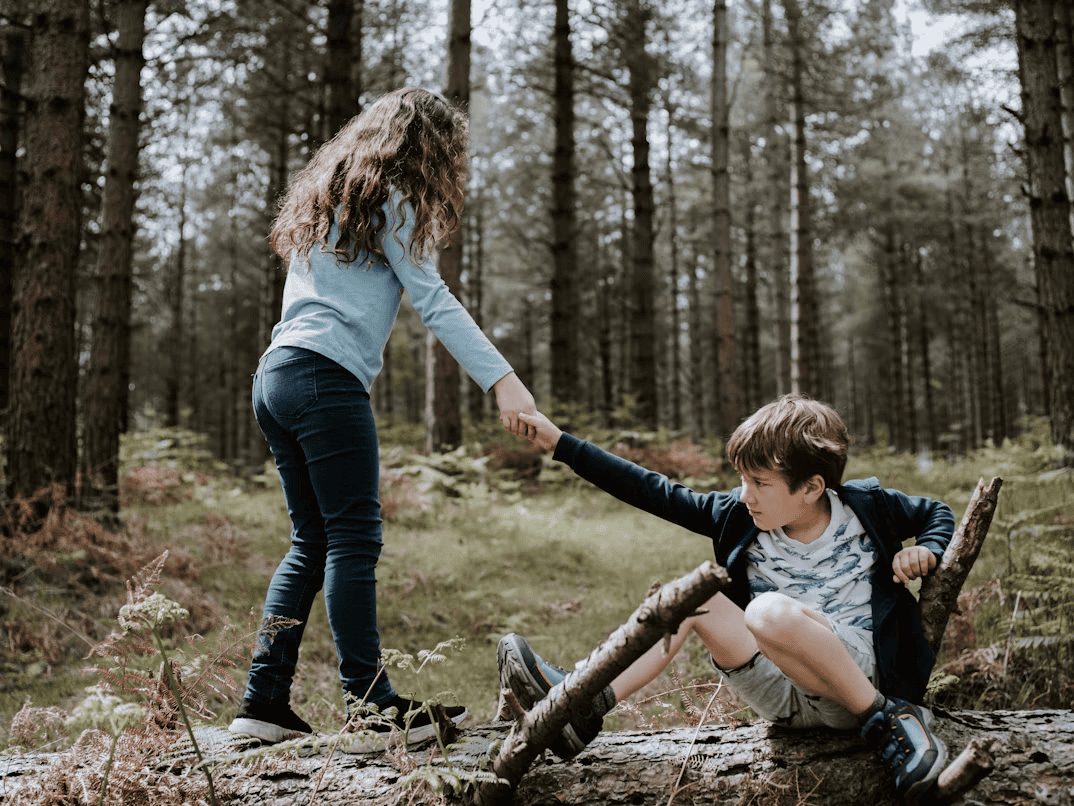
Altruism describes how we help or benefit other people, sometimes at great cost to ourselves. Altruistic behavior can be something as quick and easy as giving money to a charitable cause or helping a stranger with their groceries, to something more long-lasting, like being involved in a not-for-profit organization.
In psychology, altruism is interesting because it combines empathy, morality, and social relationships with self-interest. In this guide, we’ll cover the theories surrounding altruism that make us the helpful individuals we are.
Empathy
Empathy is one of the strongest examples of altruism. It involves us sharing someone else’s emotional experience and sometimes even being motivated to reduce their suffering. A great real-world example of empathy is the CMTR Foundation, a research foundation committed to finding treatments and a cure for Charcot-Marie-Tooth disease.
By focusing on the needs and experiences of people who need support, the foundation shows how empathy is about recognizing someone’s life challenges and being motivated to take action. We allow ourselves to understand what someone else is going through, so we respond with compassion, generosity, and practical help.
Reciprocity
Helping others isn’t entirely selfless. As highly social beings, we often help people knowing that cooperation benefits everyone over time. This is called reciprocal altruism, where we help people with the conscious or unconscious expectation that they’ll help us or someone else in return in the future.
Kin Selection
Helping others isn’t necessarily just about being an empathetic person who would do anything to ease someone else’s suffering. It can be biological: kin selection. As an evolutionary process, kin selection means that you lower your own chances of survival or reproduction to help others. It’s not just present in humans, either. Kin selection is also commonly found in nature.
For example, worker honeybees and ants sacrifice their own ability to reproduce and spend their entire lives maintaining their hive and protecting the queen, who is typically their mother or sister. Ground squirrels will also emit loud warning calls to alert their families to a predator in the area, often drawing the predator toward them and protecting others.
The Feel-Good Factor
We naturally seek out things that make us feel good. For many people, that’s altruism. We can feel happy, proud, satisfied, and connected when we help someone in need or donate to a worthy cause. Knowing that we’ll experience emotional rewards from helping others, we’re often more likely to do so.
Social Norms
As we experience everyday life and surround ourselves with other people, we learn social and societal norms. These are things that are generally expected in our communities. Common social norms include:
- Helping someone who is in danger
- Caring for the vulnerable members of our communities
- Sharing our resources
- Returning favors
We learn these ‘norms’ from our parents, teachers, cultures, and religions. While not everyone will do the things mentioned above, most people will, as they have been instilled in us from a young age.
Helping others goes beyond simply answering someone’s call for help. At a psychological level, we’re drawn to help through our genes, societal expectations, seeking the ‘warm glow’ of helping, and our empathy and compassion for others. The next time a neighbor asks for help, or a charity asks for a donation, you may have a better understanding of your natural response.