

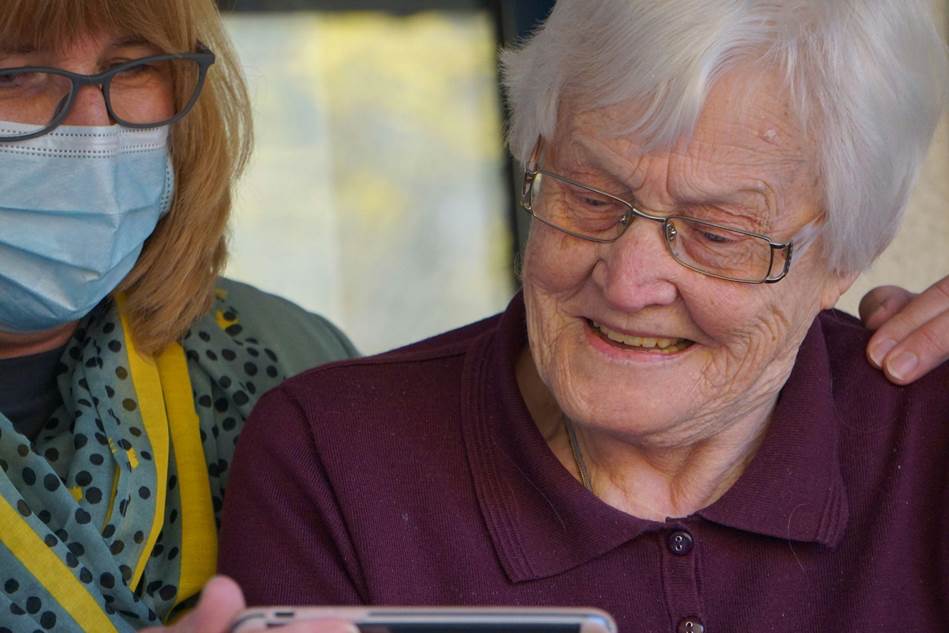
Perimenopause has a way of arriving at the same time as everything else. Sleep gets thinner, moods shift without warning, and somewhere in the middle of it a parent’s memory starts slipping, or a fall sends them to the hospital, or a doctor starts using the word “assisted” in a sentence you weren’t ready for.
Women in their 40s and 50s are disproportionately the ones managing both. It’s not a coincidence. The hormonal transition and the caregiving transition tend to land in the same decade, and most women are navigating them without having planned for either.
The overlap nobody warns you about
Hot flashes and hospital calls do not respect each other’s schedules. A woman managing her own sleep disruption, brain fog, or anxiety is, at the same time, often the point person fielding calls from a parent’s doctor, coordinating home visits, or trying to figure out whether Mom can still safely live alone. The physical and cognitive load of perimenopause makes an already demanding job harder, and the stress of caregiving can, in turn, intensify hormonal symptoms. It’s a loop, not two separate problems.
Recognizing that overlap matters, because it changes what “self-care” needs to mean during this stretch of life. It’s not a bubble bath. It’s boundaries, delegation, and knowing when a decision is bigger than what you can carry solo.
Questions worth asking before a crisis forces the issue
Most families make care decisions reactively, after a fall or a hospital stay, rather than proactively. A few questions worth sitting with before that happens:
- What does your parent actually need help with day to day, versus what worries you most?
- Is the concern medical, cognitive, or more about isolation and daily tasks?
- Who else in the family can share the load, and what does that look like concretely?
- What does your own capacity look like right now, given what you’re managing physically and emotionally?
There’s no universal right answer. A parent who needs help with medication and meals is a different situation than one showing early signs of memory loss, and the right level of support looks different for each.
You don’t have to figure out the care system alone
One of the harder parts of this stage is that the senior care landscape is genuinely confusing. Assisted living, memory care, home care, and rehab after a hospital stay all mean different things, and families often don’t know which one applies until they’re already in crisis mode. Talking to a senior care provider before a decision is urgent, rather than after, tends to lead to calmer choices. Family-owned operators like CareOne Senior Living, which has spent close to five decades running communities across five states, exist specifically to walk families through that range of options, from assisted living through memory care and rehab, rather than pushing one solution.
Give yourself permission to ask for help too
It’s easy to pour every bit of attention into a parent’s care and let your own symptoms go unaddressed. But an exhausted, under-slept, dysregulated version of you is not more available to your family, she’s less available. Getting your own hormonal symptoms evaluated isn’t a detour from caregiving. It’s part of what makes sustainable caregiving possible.
If you’re in this stretch right now, the most useful thing you can do this week isn’t a bigger to-do list. It’s one honest conversation, with a doctor about your own symptoms, or with a sibling about splitting the load, or with a care provider about what your parent’s options actually are.