

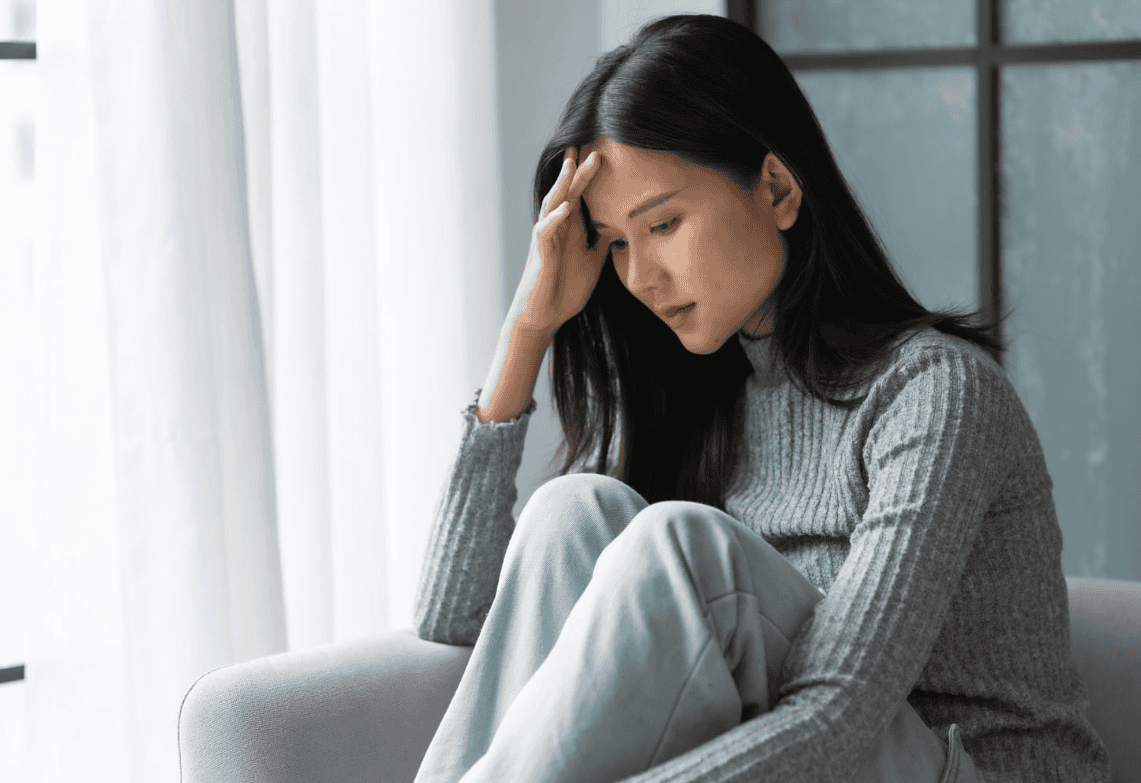
The difficult project is finally finished. The medical appointment is over. The family crisis has settled. You have reached the weekend after several exhausting days, and there is nothing urgent left to do.
Yet your body does not seem to understand.
Your shoulders remain tense. Your thoughts keep racing. Small noises make you jump. You feel physically tired but mentally alert, and when you finally get into bed, sleep does not come easily. You may even feel more anxious now that the stressful situation has ended.
This experience can be confusing, but it is not unusual. Stress does not always disappear the moment a problem is resolved. The body’s stress-response systems may need time—and the right conditions—to return to a calmer state.
In some cases, this lingering activation is described as hyperarousal: a state in which the fight-or-flight response becomes unusually sensitive or remains active longer than necessary. Hyperarousal may involve difficulty relaxing, irritability, hypervigilance, sleep disruption, muscle tension, concentration problems, and an exaggerated startle response.
That does not mean everyone who feels tense after a difficult week has a disorder. Short-term stress responses are normal and protective. However, understanding why the body sometimes stays “on” can help you respond more effectively than simply telling yourself to calm down.
What Happens During the Stress Response?
Stress begins with perception.
When the brain interprets something as demanding, unpredictable, or threatening, it prepares the body to respond. The sympathetic branch of the autonomic nervous system becomes more active, and stress-related hormones such as adrenaline and cortisol help mobilize energy.
Your heart may beat faster. Breathing may become quicker and shallower. Muscles tighten. Attention narrows toward whatever seems most urgent. Digestion and other processes that are not immediately necessary may temporarily receive less priority.
This reaction is commonly called the fight-or-flight response, although people may also experience freezing, emotional shutdown, avoidance, or attempts to appease others.
In the short term, the response can be helpful. It can sharpen attention before an important presentation, help you react to danger, or provide enough energy to handle an emergency.
Once the immediate challenge passes, the parasympathetic nervous system normally contributes to recovery. Heart rate and breathing gradually settle, muscle tension decreases, and the body redirects resources toward digestion, repair, and rest.
The problem is not that the stress response exists. The problem arises when the body continues behaving as though the challenge is still happening.
Why Can Stress Continue After the Event Is Over?
The nervous system does not respond only to objective facts. It responds to patterns, expectations, memories, physical sensations, and the brain’s interpretation of safety.
You may know intellectually that a deadline has passed, but your body may still be reacting to the habits formed during several weeks of pressure.
Perhaps you became accustomed to checking messages late at night. You slept lightly because you expected another problem. You relied on caffeine to remain productive. You ignored hunger, fatigue, and muscle tension in order to continue working.
When the project ends, those patterns do not disappear instantly.
Several factors can keep the stress response active.
The Stress Lasted Too Long
Acute stress is different from chronic stress.
A brief challenge activates the body temporarily. Chronic stress repeatedly exposes the body to demands without enough recovery time. Over time, sustained activation can affect sleep, digestion, mood, muscle tension, memory, and concentration.
This is why a single quiet evening may not feel restorative after months of pressure. The body may need repeated experiences of rest before it stops expecting the next demand.
Your Brain Learned to Anticipate Problems
The brain is designed to predict what may happen next.
If a stressful environment has been unpredictable, the nervous system may become more watchful. You might monitor changes in someone’s tone, repeatedly check your phone, rehearse conversations, or imagine what could go wrong.
These behaviors may have helped you feel prepared during a difficult period. Afterward, however, the same vigilance can make rest feel uncomfortable.
The absence of a problem is not always enough to create a sense of safety. Sometimes the brain needs repeated evidence that nothing urgent is about to happen.
You Have Not Completed the Transition Out of Stress
Many people move directly from work stress into digital stimulation.
They close a work document and immediately open social media. They finish a difficult day and watch intense television late into the night. They lie in bed while reading emails because there was no clear boundary between activity and recovery.
The body may benefit from a transition period that allows stimulation to decrease gradually.
A walk, shower, change of clothing, slow meal, conversation, breathing exercise, or period without screens can help mark the end of one state and the beginning of another.
You Are Physically Exhausted but Mentally Alert
The “wired but tired” feeling is common after prolonged stress.
Physical fatigue does not always produce sleepiness. A person may be depleted while the brain remains focused on detecting problems. This combination can lead to lying awake despite feeling exhausted, waking easily during the night, or feeling restless when attempting to relax.
Poor sleep then makes emotional regulation more difficult the following day, creating a cycle of fatigue and increased stress reactivity.
The Stressor Activated Older Experiences
Current situations can resemble earlier experiences, even when the connection is not obvious.
Conflict with a manager may activate memories of criticism. Medical uncertainty may reconnect someone with a previous health crisis. Financial pressure may revive feelings associated with childhood instability.
The nervous system may respond to the emotional meaning of a situation, not only to what is happening in the present.
This is one reason trauma-related activation can feel disproportionate or difficult to explain. The body may be reacting to a learned pattern of danger rather than only to the immediate event.
Signs Your Nervous System May Still Be Activated
Lingering stress can appear in emotional, cognitive, behavioral, and physical ways.
Common signs include:
- feeling unable to sit still or rest;
- racing thoughts after the stressful event is over;
- irritability or anger over small problems;
- being unusually sensitive to noise, light, touch, or interruptions;
- checking messages or news compulsively;
- muscle tension, jaw clenching, or headaches;
- rapid or shallow breathing;
- difficulty falling asleep or staying asleep;
- waking with a sense of urgency;
- digestive discomfort or changes in appetite;
- difficulty concentrating;
- feeling detached, numb, or emotionally flat;
- becoming easily startled;
- needing constant stimulation because quiet feels uncomfortable.
These symptoms do not prove that your nervous system is permanently damaged. They also do not identify one specific diagnosis.
Anxiety disorders, trauma-related conditions, depression, chronic pain, sleep disorders, medication effects, thyroid problems, hormonal changes, stimulant use, and other medical issues can produce overlapping symptoms.
The pattern, severity, duration, and effect on daily life matter.
Why “Just Relax” Usually Does Not Work
Relaxation is not simply a decision.
When the body is highly activated, the parts of the brain involved in threat detection may be operating faster than reflective thinking. Telling yourself that everything is fine may not immediately change your breathing, heart rate, muscle tension, or sense of danger.
Trying to force relaxation can sometimes make the experience worse.
You may begin monitoring yourself:
“Am I calmer yet?”
“Why is this not working?”
“What is wrong with me?”
That self-monitoring creates another task to perform successfully. Relaxation becomes a test, and the fear of failing it adds pressure.
A more useful approach is to provide the body with simple, repeated cues that the current moment is manageable.
The objective is not to eliminate every uncomfortable sensation. It is to help the nervous system move gradually toward greater flexibility.
Can Vagus Nerve Stimulation Help the Body Settle?
The vagus nerve is a major component of the parasympathetic nervous system. It carries signals between the brain and several areas of the body, including the heart, lungs, and digestive system.
Because of its role in brain-body communication, researchers have studied vagus nerve stimulation in medical and non-invasive forms.
Implanted VNS involves a surgically placed device and is used for specific medical indications. Non-invasive approaches apply stimulation externally, commonly through selected areas of the outer ear or the side of the neck.
Consumer vagus nerve stimulation devices are generally designed for wellness routines related to relaxation, sleep, focus, or recovery. They should not be treated as equivalent to implanted medical devices or prescription treatments.
A device may provide structure to a routine by giving the user a scheduled period to sit quietly, reduce other stimulation, and follow a consistent session. Some people may find this easier to repeat than an unstructured instruction to meditate.
However, the category requires careful evaluation.
Different devices use different contact points, electrical parameters, session lengths, and intended uses. Research on one form of stimulation does not automatically prove the effectiveness of every product marketed under the VNS label.
Consumers should look for clear explanations of:
- where stimulation is applied;
- what the device is intended to support;
- how sessions should be performed;
- how intensity is adjusted;
- which people should avoid the device;
- whether evidence relates to the specific product or only to the wider category.
A wearable should complement a healthy routine, not become a reason to ignore persistent psychological or medical symptoms.
How to Help Your Nervous System Recover After Stress
Recovery is usually more effective when it includes both immediate calming strategies and longer-term changes.
An immediate technique may help reduce activation in the moment. Long-term habits address the conditions that repeatedly push the nervous system into overdrive.
Begin With Orientation, Not Analysis
When you feel activated, start by noticing the present environment.
Look around slowly and identify where you are. Notice the room’s boundaries, the position of doors and windows, the light, and several neutral objects.
You can also identify:
- five things you see;
- four physical sensations you feel;
- three sounds you hear;
- two scents you notice;
- one taste or internal sensation.
This grounding exercise moves attention away from imagined problems and toward current sensory information.
The aim is not to convince yourself that nothing bad could ever happen. It is to recognize what is happening right now.
Slow Your Breathing Without Forcing It
Stress commonly makes breathing faster and shallower. Slowing the breath can influence cardiovascular and autonomic processes, and systematic reviews have found effects on heart-rate variability and psychological state.
Try breathing gently through the nose while allowing the lower ribs and abdomen to move.
A simple pattern is:
- inhale comfortably for four counts;
- exhale gently for five or six counts;
- repeat for two to five minutes.
The exhalation can be slightly longer than the inhalation, but it should not feel strained.
Do not take the largest breath possible. Excessively deep or rapid breathing can produce dizziness, tingling, or a feeling of breathlessness.
The goal is slower, more comfortable breathing—not maximum lung volume.
Release Muscle Tension Deliberately
People often carry tension without noticing it.
Progressive muscle relaxation involves gently tensing and then releasing different muscle groups. Reviews suggest that the technique can reduce stress and anxiety in adults.
You might begin with the hands:
- Make a gentle fist.
- Notice the tension for several seconds.
- Release it.
- Observe the contrast between tension and relaxation.
Continue through the shoulders, face, abdomen, legs, and feet.
Avoid strongly tensing painful or injured areas. The purpose is to improve awareness, not create discomfort.
Use Movement to Complete the Stress Cycle
When the body prepares for action, remaining completely still may feel difficult.
Movement gives physical energy somewhere to go. A brisk walk, light strength exercise, stretching, dancing, or shaking out the arms and legs may help after a demanding experience.
The movement does not need to be intense.
For someone who is already exhausted, a slow walk outdoors may be more regulating than a punishing workout. The best form of exercise depends on energy level, physical ability, and health.
Create a Clear End-of-Day Routine
A nervous system that has been responding to unpredictable demands may benefit from predictability.
Choose a short sequence that marks the end of the active part of the day. For example:
- Close work applications.
- Write down unfinished tasks for tomorrow.
- Put the phone away for 20 minutes.
- Change clothes or take a shower.
- Complete a breathing, stretching, or stimulation session.
- Dim the lights.
- Begin a quiet activity.
The exact steps matter less than consistency.
Repeated cues can help the brain associate a familiar sequence with reduced demand.
Reduce Stimulation Gradually
Some people attempt to move from a highly demanding day directly into complete stillness. The contrast can feel uncomfortable.
A gradual reduction may work better.
Instead of moving from intense work to silent meditation, try a sequence such as:
- work;
- short walk;
- shower;
- meal without screens;
- quiet music;
- reading;
- sleep routine.
This creates a slope rather than a sudden drop.
Address the Source of Stress
Regulation techniques are useful, but they should not become tools for tolerating an unsustainable situation indefinitely.
A breathing exercise cannot solve an abusive relationship, impossible workload, financial emergency, untreated illness, or chronic sleep deprivation.
Ask what the nervous system may be responding to.
Do you need clearer boundaries? A different work arrangement? Medical care? Trauma-informed therapy? Practical help? More sleep? Less caffeine? A difficult conversation?
Sometimes the most regulating action is not an exercise. It is changing the condition that repeatedly creates the alarm.
Building a Calming Routine That You Can Repeat
A successful nervous-system routine should be simple enough to use on an imperfect day.
Avoid creating a complicated schedule involving multiple breathing methods, cold exposure, meditation, journaling, supplements, exercise, tracking, and a wearable session all at once.
Choose three layers.
A One-Minute Practice
Use this when stress begins to rise.
For example:
- place both feet on the floor;
- look around the room;
- exhale slowly three times;
- release the jaw and shoulders.
A Ten-Minute Practice
Use this after work or before bed.
For example:
- two minutes of orientation;
- five minutes of slow breathing or progressive muscle relaxation;
- three minutes of quiet sitting.
A structured wearable session may also fit into this part of the routine, provided it is appropriate for the user and used according to its instructions.
A Weekly Recovery Practice
Use this to address accumulated stress.
Examples include:
- longer outdoor movement;
- therapy;
- time with supportive people;
- meal preparation;
- reducing unnecessary commitments;
- reviewing sources of recurring stress.
Readers exploring broader approaches to how to calm the nervous system should remember that short-term soothing and long-term regulation are related but different.
A five-minute exercise may change your immediate state. Sustainable recovery also depends on sleep, relationships, workload, physical health, and the ability to respond differently to recurring stressors.
How Long Does It Take for the Nervous System to Calm Down?
There is no universal recovery time.
After a brief, ordinary stressor, some people may feel noticeably calmer within several minutes. After prolonged pressure, recovery may take hours, days, or longer.
Trauma-related hyperarousal and anxiety disorders generally require more than a single relaxation exercise.
Recovery time can be influenced by:
- how intense the stressor was;
- how long it lasted;
- whether it is truly over;
- previous experiences;
- current sleep quality;
- stimulant or alcohol use;
- physical health;
- available social support;
- whether the person feels safe;
- the presence of an anxiety, trauma, mood, or sleep disorder.
Do not use someone else’s recovery speed as a standard.
The more useful questions are whether symptoms are becoming less intense, whether recovery is getting easier, and whether daily functioning is improving.
Can Your Nervous System Become Permanently Stuck?
The phrase “stuck in fight-or-flight” describes an experience, not necessarily permanent damage.
The nervous system remains capable of learning and adaptation. Repeated experiences of safety, effective coping skills, improved sleep, therapy, physical activity, medication when appropriate, and changes to the environment can all support recovery.
However, symptoms should not be minimized.
If activation is severe, persistent, or connected to trauma, professional treatment may be necessary. Evidence-based approaches may include cognitive behavioral therapy, trauma-focused therapies, exposure-based treatment, medication, sleep treatment, or a combination selected for the individual.
Healing is not always a matter of trying harder to relax.
When Should You Seek Professional Help?
Consider speaking with a healthcare or mental-health professional when symptoms:
- continue for several weeks;
- interfere with work, school, sleep, or relationships;
- cause repeated panic attacks;
- began after a traumatic event;
- involve frequent nightmares or intrusive memories;
- lead to avoidance of ordinary situations;
- include persistent numbness or dissociation;
- cause reliance on alcohol or other substances;
- involve unexplained fainting, chest pain, or heart-rhythm changes;
- make you feel unsafe or unable to cope.
Seek urgent help if you are at risk of harming yourself or someone else.
Physical symptoms should also be evaluated when appropriate. Thyroid disorders, anemia, heart problems, medication effects, sleep apnea, hormonal changes, and other conditions can resemble or worsen anxiety.
Frequently Asked Questions
Why do I feel anxious after the stressful situation is over?
During a crisis, attention may remain focused on solving the immediate problem. Once the situation ends, you may become more aware of physical tension, fatigue, and emotions that were temporarily pushed aside.
The nervous system may also continue anticipating another problem, especially if the stressful period was prolonged or unpredictable.
Why can’t I relax even when nothing is wrong?
Your body may not yet interpret the situation as safe.
Habitual vigilance, poor sleep, ongoing uncertainty, trauma reminders, stimulants, pain, or anxiety can keep the stress response active even when no obvious threat is present.
Can the vagus nerve turn off fight-or-flight?
The vagus nerve contributes to parasympathetic processes associated with recovery, but it is not a single switch that instantly turns stress off.
Stress regulation involves multiple brain regions, hormones, nerves, behaviors, and environmental conditions.
Does cold water reset the nervous system?
Cold exposure can produce strong physiological responses, but it does not literally reset the nervous system.
Extreme cold may also increase breathing rate, blood pressure, and stress initially. People with cardiovascular conditions, fainting history, or other relevant health concerns should seek professional guidance before experimenting with intense cold exposure.
Are vagus nerve stimulation devices safe?
Research reviews generally describe transcutaneous VNS as well tolerated under studied conditions, with local skin irritation and headache among the more commonly reported side effects. However, study protocols and commercial products vary.
Users should follow the instructions for their specific device and review contraindications. People with implanted electrical devices, significant heart conditions, seizure histories, pregnancy, or other relevant medical concerns should seek professional advice before use.
The Bottom Line
Feeling unable to relax after stress does not mean you are weak, failing, or imagining the problem.
Your body may still be carrying the habits and expectations that helped you function during a demanding period. The immediate threat can end before the nervous system has fully recognized that it is safe to recover.
The answer is rarely to force yourself to become calm.
Start with small signals: orient to the room, slow the breath, release muscle tension, move gently, reduce stimulation, and create predictable transitions. Use technology thoughtfully rather than expecting it to replace sleep, therapy, medical care, or changes to the conditions causing stress.
Most importantly, treat the body’s response as information rather than an enemy.
The goal is not to eliminate activation forever. A healthy nervous system needs the ability to respond to challenges. The goal is to help it recognize when the challenge has passed—and gradually learn that recovery is allowed.