7 Practical Ways to Reduce Work Anxiety

Work-related anxiety is a growing concern in a fast-paced professional environment, affecting millions of individuals across the globe. Characterized by persistent worry and stress about work-related issues, it can significantly hamper one’s productivity, job satisfaction, and overall quality of life. 

Addressing this form of anxiety is not just important for maintaining mental health but also for fostering a positive and productive work atmosphere. Recognizing and implementing practical strategies to mitigate work-related anxiety is essential for personal and professional well-being.

Practical Ways to Reduce Work Anxiety

Empower Yourself Against Potential Setbacks

Empowering yourself against potential setbacks is crucial in today’s ever-changing work environment. The foundation of this empowerment lies in embracing continuous learning. Keeping abreast of industry trends and enhancing your skills not only ensure your career resilience but also maintains your status as an invaluable asset within your organization.

Investing in personal health is equally important. It enables better stress management and maintains your peak performance. Alongside health, developing financial literacy is essential. It equips you with the knowledge to build a safety net, preparing you for any financial uncertainties that may arise.

Reduce Work Anxiety

One practical step in safeguarding your well-being is exploring comprehensive insurance coverage options. When considering your options for comprehensive insurance coverage, understanding the difference between POS and PPO can help you make an informed decision. Point of Service (POS) plans require referrals and use network providers for lower costs, whereas Preferred Provider Organization (PPO) plans offer more flexibility, allowing visits to any provider without referrals, though staying within the network saves money.

Choosing the right insurance plan is key to protecting against unexpected events, ensuring your work capability and peace of mind, and forming a holistic strategy for both personal and professional empowerment.

Establish Clear Boundaries

Establishing clear boundaries is pivotal for achieving a healthy work-life balance, reducing stress, and enhancing overall well-being. So, to set and maintain these boundaries, start by clearly defining and sticking to your work hours, ensuring you disconnect from work-related tasks during your off-hours. 

Moreover, communicating your availability clearly to your team is crucial for managing expectations and avoiding misunderstandings. And to further reinforce the separation between your professional and personal life, consider designating specific areas within your home exclusively for work. This physical division aids in mentally transitioning between work and personal time.

Lastly, learn to say no to additional responsibilities when you’re already at capacity, prioritizing your mental health and personal time. By following these steps, you can create a more balanced and fulfilling work-life dynamic.

Prioritize and Organize Your Tasks

Prioritizing and organizing your tasks through a well-structured to-do list can significantly improve productivity and reduce stress by ensuring focus on what truly matters. The Eisenhower Box, which involves dividing tasks into urgent/not urgent and important/not important quadrants, helps identify which tasks require immediate attention. 

Meanwhile, the Pomodoro Technique, involving working for focused intervals (typically 25 minutes) followed by short breaks, enhances concentration and prevents burnout. These methods not only streamline your workflow but also create a sense of achievement as tasks are completed.

Develop a Support Network

Developing a support network is important in mitigating anxiety by providing emotional backing and practical advice when needed. Colleagues can offer insights and solutions to work-related challenges, while friends and family provide a comforting perspective outside of professional stressors. 

To build this network, actively engage in conversations, offer your support to others, and don’t hesitate to share your feelings or ask for help. Within the workplace, fostering an environment of open communication and mutual support can create a more understanding and less stressful atmosphere for everyone involved.

Practice Mindfulness and Relaxation Techniques

Practicing mindfulness and relaxation techniques can significantly reduce anxiety and improve mental clarity. By staying present and fully engaging with the moment without judgment, mindfulness helps reduce stress and enhance emotional regulation, leading to a calmer mind and a more balanced perspective.

Simple techniques like deep breathing, where you focus on slow, controlled breaths, or progressive muscle relaxation, where you tense and then relax different muscle groups, can be practiced anywhere to induce calmness.

These practices not only help in managing immediate stress but also contribute to long-term wellness by promoting a more mindful approach to daily challenges.

Take Care of Your Physical Health

Engaging in regular exercise is beneficial beyond physical fitness. It triggers the release of endorphins, the body’s natural stress relievers and mood enhancers. This biochemical process helps lower anxiety levels by promoting feelings of well-being.

Adequate sleep is another critical factor as insufficient sleep can lead to a deterioration in mood and cognitive abilities, exacerbating anxiety symptoms. 

Nutrition also plays a pivotal role. A balanced diet supplies the body with essential nutrients crucial for properly functioning neurotransmitters, which are the brain’s chemical messengers. These nutrients have the power to influence our mood and emotional health, directly impacting anxiety levels.

Seek Professional Help When Necessary

It’s important to recognize the signs that suggest it might be time to seek professional help. These signs can include ongoing feelings of sadness or anxiety, noticeable shifts in mood or behavior, and struggling with everyday tasks.

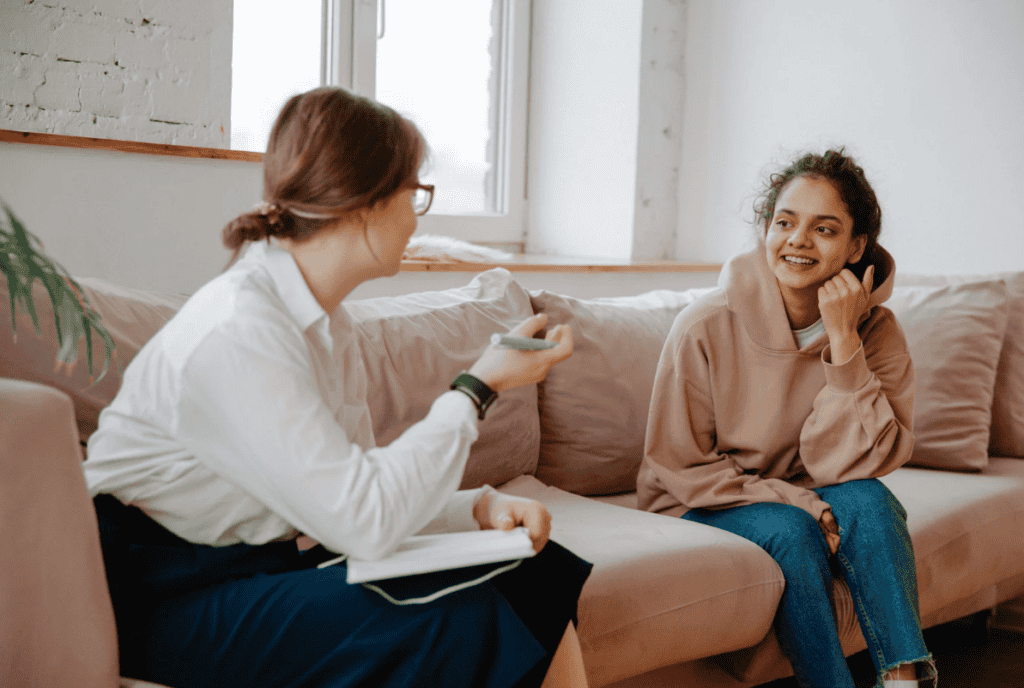
Seek professional help

Fortunately, different forms of support are available to address these issues. For example, therapy provides a confidential environment to discuss feelings and work on coping mechanisms. Counseling, on the other hand, offers guidance on particular problems, such as managing stress or navigating relationship difficulties.

By seeking assistance, individuals can gain access to specialized tools and insights that empower them to navigate through their challenges with resilience and hope. This decision not only enhances personal well-being but also enriches one’s life with a deeper sense of fulfillment and purpose.

How To Reduce Work Anxiety – Wrapping Up

It’s important to remember the power of taking actionable steps toward creating a healthier work environment. Adopting the practical strategies outlined here can help alleviate work-induced stress, leading to a more harmonious and fulfilling lifestyle. Embrace these changes with positivity and determination, and watch your work life transform into a source of satisfaction and achievement.

The Psychological Reasons Behind Playing at Online Casinos Without Real Money

People flock to online casinos without real money for reasons that go beyond just passing the time. At first glance, it might seem odd to engage in gambling where the stakes are virtually nonexistent.

However, a closer look into human psychology reveals a series of motivations driving this behavior, from the drive of risk to the pursuit of mastery and the need for a mental break.

Let’s take a look at the reasons why people choose to experience online casinos without real money:

Online Casinos Without Real Money

The Thrill of Risk and Reward

Playing online casino games without real money taps into a deep-seated human fascination with risk-taking and the buzz of potential rewards. This charge is about the game itself. When you’re faced with the virtual risk of winning or losing within the game, your brain releases dopamine.

This is the feel-good neurotransmitter that plays a big part in our experiences of pleasure and reward. Essentially, these games simulate the excitement of gambling, minus the risk of financial loss, making them incredibly engaging for players.

Social Interaction and Competition

The social aspects of online casino games add an effective layer of enjoyment. Features like multiplayer modes, chat functions, and leaderboards meet our inherent need for social interaction and competition. These elements foster a sense of community and rivalry, encouraging players to climb the ranks, complete challenges, and earn bragging rights. It’s not just about playing; it’s about being part of a community that shares your interests.

Skill Development and Mastery

For many players, the attraction to online casinos goes beyond the immediate rush of the game. There’s a strong draw towards improving one’s skills, learning new strategies, and mastering the games. This drive for self-improvement and the satisfaction that comes from progressing and becoming proficient in a game like poker, blackjack, or slots is a influential part of the appeal.

Escapism and Entertainment

Many of us turn to online casino games as a form of relaxation and entertainment. They offer an escape from the everyday, providing immersive experiences that can distract and delight. The combination of engaging gameplay, colorful graphics, and compelling sound effects makes these games a popular choice for those looking to unwind and enjoy themselves without financial stakes.

The Role of In-Game Rewards

Even without real money on the line, online casino games often feature in-game rewards, such as virtual currency, achievements, and unlockable content. These rewards motivate players to keep engaging with the game, offering a sense of progression and achievement. The pursuit of these in-game goals can be just as satisfying as winning actual money, if not more so.

Making Your First Move

Interested in getting a taste of online casino gaming without a hefty commitment? Consider starting with a $5 minimum deposit casino. It’s a low-risk way to explore real-money games, perfect for beginners or those looking to dip their toes into the gambling world with minimal financial risk. This approach allows you to experience the thrill of betting and potentially winning real money, all while keeping your initial investment low.

The Psychological Benefits of Controlled Gaming

Gaming at online casinos without real money has its share of psychological benefits, especially when it comes to managing stress and anxiety. Engaging in these games can serve as a mental break from daily stressors, offering a form of distraction that allows individuals to decompress in a controlled environment.

The key here is the element of control; players can immerse themselves in the game without the risk of financial loss, which can greatly reduce the anxiety associated with gambling. This controlled environment fosters a sense of safety and relaxation, making it an effective way to unwind and engage in leisure activities positively.

Online Casinos

Personal Achievement and Self-Esteem

Another noteworthy aspect of playing online casino games is the opportunity it provides for personal achievement and the positive impact this can have on self-esteem.

Achieving goals, whether they’re related to skill development, completing in-game challenges, or earning virtual rewards, can provide a powerful boost to one’s self-esteem.

This sense of accomplishment is a powerful motivator, driving players to set and achieve new goals. It’s a cycle that not only enhances the gaming experience but also contributes to personal growth and a positive self-image outside of the game.

Playing At Online Casinos Without Real Money

The appeal of playing online casino games without real money lies in a mix of psychological factors:

  • The excitement of risk and reward
  • The drive for social interaction and competition
  • The quest for skill improvement and mastery
  • The desire for escapism and entertainment
  • The appeal of in-game rewards

These elements come together to create an engaging, enjoyable, and rewarding experience that resonates with a broad range of motivations and desires.

Exploring the Psychological Factors Contributing to Mental Health Challenges

This article delves into the the complex network of psychological factors contributing to mental health, and mental health disorders.

Millions of people worldwide suffer from a wide range of mental health illnesses that influence their ideas, feelings, and behaviors. Numerous, varied, and complicated elements, including biological, environmental, and psychological ones, might contribute to mental health disorders.

Psychological Factors Contributing to Mental Health

Psychological Factors Contributing to Mental Health Challenges

Body perception

According to research, having an unrealistic body image might lead to negative self-perceptions. Based on what we see around us, we persuade ourselves that we should aim for perfection, even if we are aware that nobody is flawless in reality.

We come away with this sense that we are never enough. Although we constantly strive for perfection, we will never quite make it. This creates a negative body image, yet a positive body image can be achieved by striving toward acceptance. Although body image issues are not a recognized mental health diagnosis, they may be a risk factor for mental health issues.

According to some studies about how we feel about our bodies, 21% of individuals reported feeling “satisfied” with their bodies. While unhappiness with one’s physique or looks is more common in young women, body image issues impact both men and women and can persist from childhood into older life.

Studies indicate that the following factors may have an impact on one’s body image and confidence:

  • our bonds with our loved ones and friends
  • what our friends and family think and say about our body and looks
  • exposure to media or social media images of idealized or unrealistic bodies
  • pressure to conform to a given appearance or ‘ideal’ body type

Further problems with body image and mental health can also be brought on by certain societal variables, such as:

  • chronic medical issues
  • ethnic variations in ideal body types
  • sexual orientation and gender 

Stress

Our bodies’ reaction to pressure is stress. It is frequently set off when we go through something novel or unexpected that puts our sense of self in danger or when we believe we have little control over an event.

Everybody handles stress differently. Our personality, early experiences in life, genetics, and societal and economic conditions can all affect our capacity for coping.

This stress reaction can be beneficial at times. It can assist us in overcoming discomfort or fear so that, for example, we can give a speech or run a marathon. After a stressful experience, our stress hormones soon return to normal and have no long-term repercussions. But much stress might have negative consequences. It can put us in a constant state of fight-or-flight, leaving us helpless or incapable of handling things. Our emotional and physical health may be impacted in the long run by this.

Stress can result from several circumstances, including divorce or separation, job loss, bereavement, and unforeseen financial difficulties. Your mental health may suffer as a result of work-related stress and headaches. Individuals who experience stress at work miss an average of 24 days of work as a result of illness.

Stress can arise from even good life changes, including getting a promotion, upgrading to a larger home, or taking a vacation.

If the stress is persistent, you can have changes in your food habits, sleep, and memory, or motivation to exercise. Additionally, several studies have connected long-term stress to heart disease and gastrointestinal disorders. Do not hesitate to get expert assistance if you are still feeling overburdened by stress, such as going to an inpatient mental health center and discussing your feelings with a professional. It does not imply that you are unworthy.

You must seek assistance as soon as possible to improve your condition. One option is Psychotherapy and Cognitive Behavioural Therapy for the Bristol and Bath area. They might be able to offer you treatment recommendations and put you in touch with other resources. They also might recommend discussing therapy.

When stress becomes chronic or overwhelming, it can contribute to anxiety disorders, depression, and trauma-related conditions such as post-traumatic stress disorder (PTSD). While traditional approaches like cognitive behavioral therapy and medication remain first-line treatments, some individuals explore additional options when symptoms persist. Transcranial Magnetic Stimulation (TMS) has emerged as a non-invasive, FDA-cleared treatment for certain mood and anxiety conditions. TMS for anxiety may be considered in carefully selected cases, and PTSD treatment using TMS in Costa Mesa is being evaluated as a supportive option for individuals who have not responded fully to conventional therapies. As with any intervention, treatment decisions should be guided by a qualified clinician following a comprehensive assessment.

Trauma

Events that put you or a loved one in danger of grave injury or death are considered traumatic. Our normal coping mechanisms become overwhelmed, which makes us feel unsafe and afraid. 

Trauma can come to us through:

  • one-time incidents like a car accident, violent crime
  • or natural disaster recurring – stressors including bullying, abuse in childhood or from romantic partners, chronic sickness, or a pandemic
  • witnessing another person suffer harm

Your level of strength has nothing to do with how trauma affects you. Your response may vary depending on other stressors in your life, whether you have experienced trauma in the past, and the level of help you receive in the aftermath. Our bodies adapt to distressing events by getting us ready to react. There is no control over this basic survival mechanism.

Physical symptoms include a speeding heartbeat, racing thoughts, shallower, faster breathing, sharper vision, nausea, chilly hands, trembling, or dizziness. All of these help your body respond to danger, but if you don’t understand why they’re occurring, they may be unsettling or terrifying.

You may be more susceptible to mental health issues after experiencing trauma. Additionally, post-traumatic stress disorder (PTSD) may be directly caused by it. Some people abuse drugs, alcohol, or self-harm as a coping mechanism for painful memories and feelings.

Depending on how it affects you, trauma might make life tough for you daily. For instance, it could be more difficult to trust others, which could make friendships and partnerships more difficult to sustain. It could be difficult for you to take care of yourself, maintain a job, or enjoy activities you used to enjoy. It’s possible that you struggle to control your emotions and that your mind is reacting to memories of past experiences rather than the present circumstances, which could make you feel irrational.

Discrimination 

Discrimination and stigma exacerbate the struggles of many people. The media, employers, society, and even our friends and family can be the source of it. Internalized stigma is a possibility, in which case you start to believe unfavorable messages or preconceptions about yourself. Almost 90% of individuals with mental health issues claim that stigma and discrimination negatively impact their lives.

Factors Contributing to Mental Health

It is well known that among all groups with a chronic illness or disability, those with mental health issues are among the least likely to obtain employment, maintain a stable, long-term relationship, reside in a decent home, and integrate socially into society at large.

There is a connection between mental illness and social isolation, substandard housing, unemployment, and poverty. So, prejudice and stigmatization can keep people stuck in a vicious cycle of sickness.

There are various forms of stigma that one may encounter, such as discrimination based on one’s ethnicity, gender, sexual orientation, or handicap. There are numerous justifications for this discrimination, such as:

  • Prejudices. Stereotypes about mental illness can exist in society. It’s a common misconception that individuals with mental health issues are dangerous, but in reality, they are more likely to suffer self-harm or be attacked than to harm others.
  • Media. Media stories frequently associate mental illness with violence or depict those who suffer from mental illness as dangerous, criminals, wicked, or severely crippled, making it impossible for them to lead regular, fulfilling lives.

Encouraging someone to talk about their feelings without feeling guilty or stigmatized could have a profound impact. It’s critical to address the stigma you experience if you have any suspicions about a problem. You could waste time trying to help them if you just wait and hope they come to you.

An individual’s mental health outcomes can be influenced by a variety of factors, including their upbringing, experiences, family, and environment. Mental health is a complicated topic.

Improving mental health and well-being can be facilitated by being aware of and taking action against these variables. The general quality of life and mental health can be enhanced by fostering good attitudes toward mental health, lowering stigma, and obtaining assistance from mental health management groups.

How to Deal with the Loss of a Loved One?

One of the most difficult things that many of us have to deal with is losing a close friend or family member. Grieving over the loss of a parent, sibling, or spouse can be very difficult. Even when we accept that loss is a normal part of life, shock, and confusion can nonetheless overwhelm us and cause protracted depressive or melancholic episodes.

Though the severity of the loss usually lessens with time, mourning is a necessary process to get past these emotions and keep cherishing the time you spent with your loved one. Everybody experiences death differently and deals with grief in their own unique ways. 

According to research, most people who have social support and healthy behaviors may heal from loss on their own over time.

Accepting a loss can take months or even a year and no set amount of time is “normal” for grieving. Here are a few suggestions to assist you deal with the death of a loved one.

Deal with the Loss of a Loved One

You’re likely to experience waves of emotions when you’re grieving. When grieving, there are no right or wrong emotions. You can be crying one moment and feeling fine the next. You might also experience contradictory or perplexing feelings, like:

  • Experiencing both sadness at the loss of a loved one and relief that they are no longer in agony.
  • Feeling content with your fresh start but also missing your ex after a divorce.
  • Feeling bad about being happy that you don’t have to care for a loved one who is dying.
  • Grieving the loss of a difficult-to-relate-to person while simultaneously experiencing apathy, rage, sadness, and regret.

Take your time

Grieving has no time restriction. Don’t attempt to do too much before you feel ready, and permit yourself to be depressed. 

Other losses following a bereavement may include losing one’s job, house, or responsibility for caring for a loved one. Let yourself mourn all these losses. Any of them could significantly affect your life.

Making a claim for wrongful death

It must be difficult to lose a family member in an accident. The most crucial thing to do after a car or any other accident is to determine what caused the victim’s death. If the motorist who was at fault or any other party engaged in negligence, the surviving family members may be entitled to reimbursement for the unforeseen expenses.

This is especially valid in situations when the departed served as the primary breadwinner. To preserve evidence, witness statements, and other components necessary for a successful claim, it is imperative that you act quickly.

Although they are unable to replace your loved one, compassionate wrongful death attorneys of Thomas Law Offices can provide support during this difficult time. This is important because they can help, no matter how difficult the case is, and give you knowledge about your rights. 

Talk with others

To help you understand what happened and remember your loved one, talk about their death with family, friends, coworkers, or a GP, bereavement counselor, or charity helpline. Isolation and a disruption in the healing process with your support systems are two consequences of avoidance.

Speaking with others about your emotions, memories, and ideas about the deceased person can be beneficial. People may avoid discussing death with you. This can be upsetting, but it’s typically because they’re at a loss for words and don’t want to annoy you. Try expressing your feelings. Hopefully, even if they are unsure of how to strike up a discussion, people will be happy to listen.

Accepting feelings

Though you can try, you can’t put your sadness away permanently. You must admit your pain if you want to recover. Avoiding depression and loss-related emotions just can make the grieving process take longer. Recognize and accept your emotions. You could feel a lot of different things, like despair, rage, or even tiredness.

All of these emotions are common, and it’s critical to identify when you’re experiencing them. Speak with a certified psychologist or other mental health specialist if you feel trapped or overtaken by these sentiments; they can assist you in overcoming your emotions and figuring out how to get back on track. Additionally, unresolved sorrow can result in issues including alcohol misuse, anxiety, depression, and other health problems.

Taking care of yourself and others

Make an effort to keep up with your interests and hobbies. Regularity can be comforting, and returning to the things that make you happy and strengthen your relationships with others can help you grieve and accept your loss.

Your physical and emotional well-being can be enhanced by eating well, exercising, and getting enough sleep. The physical effects of sorrow might be felt for some time. Verify that the people you care about are maintaining their health by making sure you check in with them.

Honor and commemorate the lives of the people you love

Friends and relatives may experience sadness on the anniversary of a loved one’s passing, but it may also be a moment to remember and pay tribute to them. You can choose to start a garden in remembrance of the departed, give a baby a family name, or gather funds for their preferred charity. It is up to you what you decide, as long as it enables you to pay tribute to that special relationship in a way that makes sense to you.

Loss of a Loved One

Take caution when using social media

Social media can help inform people about your loss and request help. But it can also draw Internet trolls who leave offensive, hurtful, or downright offensive comments. You might wish to restrict your use of social media at this time to private groups rather than public posts that are open to public commentary to spare yourself more suffering.

It’s critical to keep in mind that everyone uniquely handles loss. Even while you might go through all phases of mourning, you might also find it challenging to categorize your emotions into a certain stage. When coping with loss, practice self-compassion and acceptance of your emotions.

Give yourself enough time to deal with all of your feelings. You are the only one who can assist yourself go over your feelings and thoughts when you go through the grieving process. Always take it slow and let people help you along the way. You’ll be able to move on and enjoy life once more in due course.

How to Find the Right Therapist for Your Mental Health Needs

Mental health is almost as important as your physical health, if not more. If you are not mentally healthy, you can do harm to the people around you as well as your surroundings. Therapists are there to help you go through all the difficulties in life and help you manage them, so finding one that suits you is of paramount importance.

This post tackles some key points to consider to help you to find the right therapist for your personal mental healthcare needs:

Find the Right Therapist

What do you need? 

When looking for any professional, it is of great importance to know what you are looking for and the same is true when looking for a therapist. There are many different kinds of therapists and you need to choose the one that best suits your needs. You need to look introspectively, try to find what is wrong with you, and try to get to the root of the problem.

Once you think you have an answer to the question, try to find a therapist who specializes in those types of issues. Once you sit with them, it will be much easier to figure out how to help you when you have already thought about your problem.

Think About The Therapist

Every therapist has a different persona. Some of them are direct and harsh, while others are flexible and want to sympathize with you. Both of these methods work but it is important to think about yourself and what suits you better.

Go to a therapist, some of whom you think may help you, and see whether the approach they are taking is really helping you. Give them some time and if you do not think it is good enough, then go to another. 

Nothing Will Happen Overnight

One thing most people think when they go and seek help from a therapist is that they are miracle workers and all their trouble will go away with one hour talking with their therapist. Even though that would be amazing, you should know that it is a fantasy.

Therapy can be a long and challenging process that can take much more time than you think, depending on the issues you may have. You may think that your problems are easily fixable, but in most cases, there are many hidden things that you need to set in order so that you can move along freely. So once you start going to a therapist, do not lose hope easily after a few setbacks; try your best to persevere through it all.

finding a therapist

Hear What Other People Have To Say

One great way to find the best therapists in your area is to ask the people around you if they know someone who can help you out. If you do not want to share with other people that you are seeing a therapist, it would be best not to do this, but if that is not the case, then be free to ask as many people as possible. Most people nowadays go to therapists so you won’t have too much trouble finding some good ones in your vicinity.

Most people need therapy but finding a good therapist that can help you out in the right way can be challenging. There needs to be a lot of research and introspection to find the right one for you and subsequently get better.

The Importance of Seeing a Psychiatrist After a Bicycle Accident

In major US cities, where bicycles weave through traffic, the heightened potential for bicycle accidents is evident. Beyond physical injuries, the emotional toll resulting from a bicycle accident is often overlooked. Victims and first responders would often focus on the physical injuries that overshadow the significant but silent psychological trauma.

To ensure recovery from the accident, one needs to see a psychiatrist. Unfortunately, this is not always the case with most bicycle accident victims. The victims’ emotional injuries are likely to linger long after their physical wounds have healed.

In this article, we dive into the benefits of meeting a psychiatrist after a bicycle accident, explaining the lasting impacts of psychological trauma and the reasons why you may need a bicycle accident lawyer.

Psychiatrist After a Bicycle Accident

Main Causes of Bicycle Accidents

Despite the efforts made by cyclists navigating the bustling streets, bicycle accidents still occur. Some of these efforts include advocating for improved infrastructure, heightened rider awareness, and seeking legal recourse when accidents occur.

In most cities, bicycle accidents stem from various factors, creating a complex web of risks for cyclists. Some of these factors include, but are not limited to:

  • Traffic Congestion: High-density traffic increases the likelihood of collisions
  • Poor Infrastructure: They include poor road conditions and inadequate bicycle lanes
  • Driver Negligence: Most inattentive motorists fail to yield or observe cyclists

Most of these elements converge, underscoring the need for heightened safety measures. To address the aftermath of a bicycle accident resulting from some of these causes, filing a bicycle accident claim within the statute of limitations is crucial. A timely filed bicycle accident claim will increase your chances of getting fair and equitable compensation.

Benefits of Seeing a Psychiatrist During the Recovery Process from a Bicycle Accident

Beyond physical injuries, bicycle accidents can have a profound impact. Emerging as the most significant consequence is psychological trauma. A bicycle accident’s emotional toll can manifest in various ways and potentially lead to a range of mental health issues.

The victims may experience fear, heightened stress, and a reluctance to engage in activities they used to enjoy. Therefore, this implies that the aftermath of a bicycle accident can significantly disrupt the victim’s daily life, relationships, and overall mental well-being. This underscores the importance of addressing both the physical and psychological aspects of recovery.

For a timely intervention, it is important to recognize psychological symptoms. Although these symptoms may vary among victims, some of the common symptoms include:

  • Persistent fear
  • Feelings of anxiety
  • Intrusive thoughts
  • Nightmares
  • Mood swings
  • Sleep issues
  • Changes in appetite

To overcome these symptoms, one needs to consult a therapist. A psychiatrist can provide essential support in managing and overcoming these psychological challenges, fostering a more comprehensive and effective recovery process.

Benefits of Hiring a Bicycle Accident Attorney

For a holistic recovery from a bicycle accident, you may need both a psychiatrist and an attorney. Your attorney would collaborate with your psychiatrist by utilizing their expert evaluation to substantiate your psychological damage and strengthen your compensation claim.

The attorney will advocate for comprehensive compensation that addresses your medical expenses, therapy costs, lost wages, and pain and suffering. They will ensure that your case is meticulously constructed, drawing on psychiatric reports to emphasize the emotional toll of the bicycle accident. With this evidence, you maximize the chances of a successful claim.

Psychiatrist

Seeing A Psychiatrist After a Bicycle Accident

The main reasons for bicycle accidents, including traffic congestion, poor infrastructure, and driver negligence, contribute to both the physical and psychological consequences. Since the emotional impact may also alter the victim’s normal life, it’s important to seek timely psychiatric support.

Besides emotional wellness and recovery, the benefits of seeking psychiatric help in the aftermath of a bicycle accident extend to crafting a strong compensation claim. This holistic approach not only addresses immediate medical needs but also ensures a comprehensive recovery that targets both your physical and psychological well-being.

From Dependency to Freedom: Overcoming Alcohol Addiction

Alcohol addiction is a complex and challenging issue that affects millions of individuals worldwide. If you’re reading this, chances are you or someone you know is struggling with alcohol dependence. The journey from dependency to freedom is not easy, but it is entirely possible with determination, support, and the right approach.

Overcoming Alcohol Addiction

Acknowledging the Problem

The first step towards overcoming alcohol addiction is acknowledging that you have a problem. This can be one of the most difficult steps, as it requires you to confront your behavior and its consequences. However, it’s essential to understand that there’s no shame in admitting you need help.

Gaining help at a center for Bali alcohol rehab for Aussies can provide tailored treatment programs specifically designed to address the needs of individuals from Australia struggling with alcohol addiction. By recognizing the impact that alcohol is having on your life, you’re already taking a crucial step toward recovery and finding the treatment for you.

Seeking Support

Recovery from alcohol addiction is not something you have to face alone. Seeking support from friends, family, or support groups can provide you with the encouragement and guidance you need to stay on track.

Additionally, professional help from therapists, counselors, or addiction specialists can offer invaluable insights and strategies to help you overcome the challenges of addiction. Surrounding yourself with a supportive network can make all the difference in your journey towards freedom from alcohol dependence.

  • Reach out to trusted friends and family members who can offer encouragement and understanding. Opening up about your struggles with alcohol addiction can be intimidating, but sharing your journey with loved ones can provide a vital support system. Their encouragement and empathy can help alleviate feelings of isolation and empower you to seek professional help.
  • Consider joining a support group or attending Alcoholics Anonymous (AA) meetings. Connecting with others who are going through similar experiences can provide a sense of camaraderie and accountability. Hearing stories of recovery and learning from the experiences of others can offer valuable insights and inspiration on your journey to sobriety.

Developing Coping Strategies

Learning to cope with cravings and triggers is an essential aspect of overcoming alcohol addiction. By developing healthy coping strategies, you can effectively manage stress, anxiety, and other emotions without turning to alcohol for relief.

This might involve practicing mindfulness and relaxation techniques, engaging in regular exercise, or pursuing hobbies and activities that bring you joy and fulfillment. Finding alternative ways to cope with life’s challenges will not only support your recovery but also enhance your overall well-being.

  • Practice mindfulness and relaxation techniques to manage stress and cravings. Techniques such as deep breathing, meditation, and progressive muscle relaxation can help calm your mind and body when faced with triggers or challenging emotions. Incorporating these practices into your daily routine can help reduce the urge to turn to alcohol for relief.
  • Engage in regular exercise to improve your mood and reduce cravings. Physical activity releases endorphins, which are natural mood-boosting chemicals that can help alleviate feelings of anxiety and depression often associated with alcohol withdrawal. Find activities that you enjoy and make them a regular part of your routine to support your overall well-being.

Making Lifestyle Changes

Breaking free from alcohol addiction often requires making significant lifestyle changes. This might involve avoiding environments or social situations where alcohol is present, reassessing relationships that may be enabling your addiction, and adopting healthier habits such as eating well and getting enough sleep. Embracing a lifestyle that prioritizes your physical, emotional, and mental health can help you create a solid foundation for long-term sobriety.

  • Identify and avoid triggers that may tempt you to drink. This could include certain social situations, places, or people that are associated with drinking. Creating a plan to navigate these triggers and develop alternative coping strategies can help you stay on track with your sobriety goals.
  • Cultivate a supportive social network of friends and peers who respect your decision to abstain from alcohol. Surround yourself with people who encourage healthy habits and provide positive reinforcement for your efforts towards sobriety. Distance yourself from individuals who may pressure you to drink or undermine your commitment to recovery.
  • Prioritize self-care by adopting healthy habits such as eating a balanced diet, getting enough sleep, and practicing good hygiene. Taking care of your physical health can help improve your mood, boost your energy levels, and strengthen your resilience in the face of cravings or setbacks. Make self-care a non-negotiable part of your daily routine to support your ongoing recovery journey.
Alcohol Addiction

Overcoming alcohol addiction is a journey that requires courage, determination, and support. By acknowledging the problem, seeking support, developing coping strategies, and making lifestyle changes, you can break free from the grip of alcohol dependence and reclaim control of your life.

Remember, recovery is possible, and you are not alone. With the right resources and commitment, you can embark on a path toward a brighter, healthier future free from the constraints of addiction.

Intuition vs Anxiety: The Difference Between Gut Instinct and Irrational Fear

Have you ever stood at a crossroads, torn between a gut feeling nudging you forward and a whisper of worry holding you back? This is the battleground of intuition vs anxiety.

It can be hard and important to tell the difference between these two in real life. You will know the difference between intuition and anxiety after reading this blog post. You will also know how to use your inner voice to make better choices and live a happier life.

Intuition vs Anxiety

Understanding Intuition

People often refer to intuition as their “inner voice.” Intuition is that deep-seated sense of knowing that can’t be explained by logic. Not yell or rant, but it makes suggestions. You could say it’s like having a “feeling in your bones” about someone or something.

People have said that intuition can help them solve problems, be more creative, and even save lives. It comes from a mix of our experiences and unspoken knowledge and is often the unsung hero of clear, good decisions.

Recognizing Anxiety

Anxiety is the feared cousin, cloaked in apprehension and often illogical panic. When anxiety takes the reins, it clouds our judgment and warps our perception of reality.

It’s the jerk reaction that makes one avoid a street because “it feels off,” even when no discernible threat is present. This fear is irrational, leading to missed opportunities and a decreased quality of life when allowed to take the lead.

Key Differences

To the untrained ear, telling intuition from anxiety can be tough. Intuition guides towards what’s best, like choosing left over right, while anxiety says, “Don’t go.” Anxiety signals danger, while intuition focuses on the right path for unknown reasons.

The trick is to untangle your thoughts. If you can pinpoint a worry, seek more info, or ask questions – that’s likely intuition. If evidence can’t ease your worry, it’s anxiety.

Anxiety vs Intuition

Managing Intuition and Anxiety

Both mental processes, trusting your gut instinct and managing it, are achievable. Cultivate trust in your gut instinct by recalling times when your intuition proved accurate.

One way to tell the difference between your gut instinct and the constant chatter of anxiety is to be mindful and listen. Do things that make you feel better, like art or meditation. These can help you feel safe and get away from the stress in your life.

When facing anxiety, the aim isn’t to completely silence it (an impossible task) but to control its impact. Cognitive restructuring, therapy, and medication can help tackle irrational fear, letting your intuition shine more.

View this page on anxiety therapy in Edmonton as part of your daily routine, and install some of the strategies discussed. With practice, discerning intuition from anxiety becomes clearer, and you will find yourself making decisions with the grounded confidence that comes with knowing when to listen to your gut.

Intuition vs Anxiety – Mastering the Balance for a Better Life

In the duel of intuition vs anxiety, understanding and managing the fine line between them empowers us to make more informed decisions. By recognizing and fostering intuition, while also addressing and mitigating anxiety, individuals can achieve a delicate balance that bolsters confidence and decision-making prowess.

Mastering this balance enriches our personal and professional lives, paving the way for a future where choices are made with clarity and confidence. The mastery of intuition vs anxiety is a quintessential skill for thriving in an unpredictable world. Keep browsing our website for more helpful articles!

The Rise of Online Casino Sites in India: A Comprehensive Guide to Winning Big

The gaming industry has changed to accept online platforms as technology keeps making major strides. As more people choose the ease and accessibility of playing from home, online casinos are growing in popularity in India.

This comprehensive guide to winning big covers the history of gambling in India, the factors that led to the growth of online casinos there, and a summary of the online casino sites that accept players from that nation.

Why Indians are Getting More and More Into Online Casinos?

The growing availability of high-speed internet is one of the main causes of the popularity boom of online gambling in India. Online casinos have developed into quick, simple, and safe gaming venues as more and more people have access to the internet and mobile devices.

A major draw for gamers to online casinos is the ease with which they may play from home. There are many various games available on online gambling sites, varying in difficulty and excitement, from table games to slots.

The rise of mobile gaming, which provides a level of portability that traditional casinos cannot match, is another factor in the appeal of online casinos. An additional level of convenience to the gambling experience is provided by the ability for players to spin the reels or place bets on their laptops, tablets, or cellphones.

Moreover, gamers may deposit and withdraw money more easily thanks to well-known payment methods like Paytm and Google Pay, which provide safe and simple transactions.

Comprehensive Guide to Winning Big

Is it Legal to Play Online Casinos in India?

The growing acceptance of online casinos in India has made players’ concerns about their legality and fairness paramount. Reputable authorities must license and regulate online casinos in order to guarantee that they run morally and openly.

The legal environment around online gambling, the function of regulation and licensing, and a comparison of licensing authorities are all covered in detail in this section of the entire guide to winning big in Indian online casinos.

The Indian Online Casino Industry’s Legality

The question of online casinos’ legal position in India is intricate and frequently perplexing. It is still illegal to gamble in India in any way, even online, according to the Public Gambling Act of 1867. Nevertheless, this rule is out of date in the era of the Internet and does not specifically address online gambling.

The actual application of this regulation varies from state to state and is restricted. While some governments have licensed and regulated land-based casinos, like Goa and Sikkim, others have more stringent controls or none at all.

In recent years, the Supreme Court of India has also offered its opinion on the legitimacy of online gambling. In 2015, the court decided that gambling websites that operate outside of India are unlawful.

In 2018, it declined to outlaw online rummy, a well-liked card game, on the grounds that it is a skill-based game as opposed to a chance-based one. But since the law is still unclear, gamers should always proceed with caution and conduct their own due diligence before participating in any online gaming.

The Function of Regulation and Licensing

Regulation and licensing are essential to guaranteeing responsible and equitable operations of online casinos and safeguarding players against dishonest or deceitful operators. A casino that holds a valid license from an established licensing body is guaranteed to adhere to strict safety, security, and fairness regulations as well as to undergo frequent audits and inspections.

An online casino must meet stringent rules and standards in order to receive a license from licensing authorities. Financial stability, technological security measures, guidelines for responsible gaming, and openness in promotions and advertising are a few examples of these prerequisites. After obtaining a license, the casino must often adhere to continuing reporting and auditing regulations, as well as pay recurring fees and taxes.

Top Casino Games

There are a ton of alternatives available when it comes to casino games. The casino sector offers games for all tastes, from traditional card games to contemporary tech-based titles. Numerous casino games have flooded into India along with the growth in popularity of online casino sites. This tutorial will cover the most popular casino games available in India, how to play their various varieties, and strategies for winning when playing online casinos.

Roulette

In the traditional casino game of roulette, a ball spins around a wheel that is decorated with patterns, colors, and numbers. On the location where the ball will land, players place bets. There are two types of roulette available in India: American roulette and European roulette.

Baccarat

Players in the card game baccarat place bets on how a hand will turn out. The goal is to have the hand that is closest to nine.

Blackjack

In the card game blackjack, players take on the dealer. The goal is to outscore the dealer with a hand that is closer to 21 without going over.

Andar Bahar

In the classic Indian card game Andar Bahar, the object is to predict if the selected card will land in the Andar (left) or Bahar (right) pile.

Slots

Slot machines are reel-spinning, automated casino games. When the reels stop spinning, players bet on which symbols will appear app. The game is simple to play and doesn’t require any special abilities.

How to Play Various Versions of Well-Known Casino Games?

Comprehending the regulations and available betting alternatives is crucial when playing various casino game variants.

  • In Baccarat, for instance, bettors must wager on the player’s hand, the banker’s hand, or a tie in the game’s outcome.
  • The goal of blackjack is to have a hand that is closer to 21 than the dealer’s after bets are placed. The dealer will deal two cards.
  • In roulette, bets are made on areas with black and red, colored numbers, or patterns.
  • Gamers place bets on where a chosen card will be found in Andar Bahar (left) or Bahar (right).

A Comprehensive Guide to Winning Big in Internet Casino Games:

  1. Prior to using real money, become familiar with the game’s regulations and play through some practice.
  2. Effectively manage your money by creating and adhering to a budget.
  3. Try out several game types, then pick the ones with the highest RTP (Return to Player).
  4. Benefit from the promotions and incentives that online casinos are offering.
  5. Recognize when to give up and avoid chasing losses.

Payment Methods

The simplicity and ease of payment options are important variables that impact the performance of Indian online casino sites. Since they allow users to fund their accounts and cash out their winnings, payment mechanisms are crucial to the online gambling sector.

The Finest Payment Options for Gamers in India

Indian gamers can fund their online casino accounts using a variety of payment methods. The following are a few of the top payment options for Indian players:

  • UPI Payments: Real-time payments between bank accounts are made possible by the UPI (Unified Payment Interface) technology. Due to its speed, security, and ease of use, Indian players favor this payment option.
  • Net Banking: Indian players can move money straight from their bank accounts to their online casino accounts via Net Banking, a web-based payment option.
  • E-wallets: For Indian players, e-wallets like PayPal, Skrill, and Neteller are becoming more and more popular as a means of payment. They have strong security measures in place and provide instantaneous deposits and withdrawals.
  • Prepaid Cards: Another well-liked payment option for Indian players are prepaid cards, including Paysafecard. They provide great levels of protection and are simple to use.

How Online Casino Deposits and Withdrawals Are Made?

In online casinos, the process of making payments and withdrawals is simple. In order to deposit money, gamers need to do the following:

  1. Open their account at the online casino. 
  2. Proceed to the area where the cashiers are located. 
  3. Choose the choice for deposit. 
  4. Select the payment option that best suits them. 
  5. Put in the desired amount to be deposited.
  6. Verify the transaction. 

Bonuses and Promotions

The availability of bonuses and promotions is one of the main benefits of playing at Indian online casinos. These bonuses have the power to greatly expand a player’s bankroll and raise their chances of winning the big prize. This in-depth guide will examine the various bonuses and promotions that online casinos provide, along with the top bonus deals that Indian players can take advantage of.

Different Bonus and Promotion Types Available at Online Casinos

Numerous bonuses and promotions are available at online casinos, each with their own set of rules and regulations. Among the most prevalent kinds are:

  • Welcome Bonus: New players receive this bonus when they sign up. Typically, it involves a deposit match bonus, in which the player’s first deposit is matched up to a predetermined sum by the casino.
  • No Deposit Bonus: This type of bonus exempts players from having to make a deposit in order to participate. Rather, the casino welcomes new players with a meager sum of free money or bonus spins.
  • Reload Bonus: This is a bonus given to current clients that deposit money. Usually, a deposit match bonus is involved, however the specific percentage and amount given can change.
  • Cashback Bonus: This type of bonus reimburses a portion of the player’s losses. For instance, a player may get a 10% payback bonus, or INR 100, if they lose INR 1000.
  • Free Spins: This promotion gives participants a set amount of free spins on a few different slot machine games.
Guide to Winning Big

Online casinos in India with the best bonus offers

In India, there are numerous online casinos that welcome new customers with attractive bonus packages. 22Bet Casino is among the greatest choices; it provides a welcome bonus of up to INR 25,000 along with 22 bonus spins. LeoVegas Casino is an additional fantastic choice, with a welcome bonus of up to INR 80,000 along with 100 bonus spins. Several noteworthy bonus deals are as follows:

  1. Betway Casino: Get a welcome bonus on your first three deposits of up to INR 60,000.
  2. 10Cric Casino: 150 bonus spins and a welcome bonus of up to INR 75,000.
  3. Royal Panda Casino: 10 free spins with a welcome bonus of up to INR 100,000.

Conditions attached to bonus offers

Before claiming any bonus offer, gamers should make sure they have read and comprehended the terms and conditions. Typical prerequisites include the following:

  • Wagering requirements: Before the bonus money can be withdrawn, players must wager it a specific number of times.
  • Restrictions on games: Certain bonuses can only be used on particular games, and others might only count toward a smaller portion of the wagering requirements.
  • Time restrictions: Bonuses may have a time limit and players must use them before that date.
  • Maximum withdrawal limits: Players who get certain bonuses are restricted from withdrawing more than a predetermined sum of their profits.

What Facebook, TikTok, and Slot Machines Have in Common

At first sight, social media and online slots seem completely different. They cater to completely different demographics with completely different interests. But if you dig deeper, you’ll find they do have something in common: the ability to pull users into a trance-like state.

This isn’t about the content but rather the behavioural loops these platforms create: they draw users in and keep them engaged for hours on end.

On this post, let’s tackle the common denominators between Facebook, Tiktok and slot machines.

Slot Machines

The Machine Zone: A Digital Trance

The term “machine zone” might sound like science fiction, but it’s a very real and powerful effect. And it affects social media users and slot machines alike.

The term, coined by MIT anthropologist Natasha Schüll, describes a state of hypnotic engagement. In the machine zone, time, space, and social connections seem to melt away. Users enter this zone when the interaction with the device becomes a loop of endless scrolling or pressing buttons.

Users receive rewards in the form of likes, shares, comments, or in the case of online casino slots, winning spins and bonus games. No matter if they involve actual money or virtual credits, the effect is the same.

The Mechanics Behind the Screen

So, what drives us into the machine zone?

It boils down to the design of these platforms, which are finely tuned to exploit human psychology. They offer quick, unpredictable rewards that keep us coming back for more. Every like on Facebook, every swipe on TikTok, and every spin can lead to a reward. This makes the scrolling, swiping, and spinning of the reels satisfying and compelling to repeat.

The concept is a lot like the “flow,” a state of complete absorption in an activity, but with a critical difference. Flow is generally positive, associated with activities that challenge and fulfil us. The machine zone, in turn, lacks meaningful goals and often leaves users feeling empty or regretful after the fact.

The Rise of Doomscrolling

“Doomscrolling” is a specific form of the machine zone that has gained prominence with the rise of social media. It refers to the act of endlessly scrolling through bad news or negative content, even when it causes distress.

This behaviour is particularly common on platforms like Facebook and TikTok. Here, algorithms curate a never-ending stream of content designed to keep users engaged. Like slot machines, the unpredictability of what comes next – a funny video or a distressing news article – keeps us hooked. It keeps us endlessly scrolling or pulling down to refresh for the next digital reward.

The Impact on Us

While spending time in the machine zone can be a harmless way to unwind, prolonged engagement has its downsides. Users often report feeling like they’ve wasted time or become disconnected as a result. The constant exposure to a mix of content, especially negative or distressing news, can cause stress and have a real impact on mental health.

The allure of these digital experiences raises questions about the ethics of design in the tech industry. Are platforms – social networks and online casinos – exploiting our psychological vulnerabilities to keep us engaged? And if so, what responsibility do they bear for the effects on our well-being?

slot machines players

Finding Balance

Understanding the machine zone and doomscrolling is the first step towards healthier engagement with technology. It’s essential to recognize when we’re entering these states and to set limits on our usage. Here are a few tips for maintaining a balance:

  • Set Time Limits: Use built-in tools on your devices to monitor and limit your daily usage.
  • Curate Your Feeds: Take control over what content you’re exposed to. Unfollow or mute accounts that contribute to negative feelings.
  • Schedule Tech Breaks: Make a conscious effort to take regular breaks from screens throughout the day.
  • Engage Mindfully: Try to be more conscious of why you’re using these platforms. Is it for relaxation, to connect with friends, or out of habit?

While Facebook, TikTok, and slot machines seem completely different, they share the ability to draw users into the machine zone. This state of engagement, while compelling, can have unintended consequences on our time – and mental health. By understanding and recognizing these patterns, we can make our interactions with technology more mindful and balanced. We can allow ourselves to reap the benefits of connectivity and entertainment without falling into this trap.